
G45.9

G45.9: Transient cerebral ischemic attack, unspecified

The ICD-10-CM code for a transient ischemic attack when the deficit has resolved, imaging shows no acute infarction, and the affected vascular territory is not documented.

Billable
FY2027

TABLE OF CONTENTS

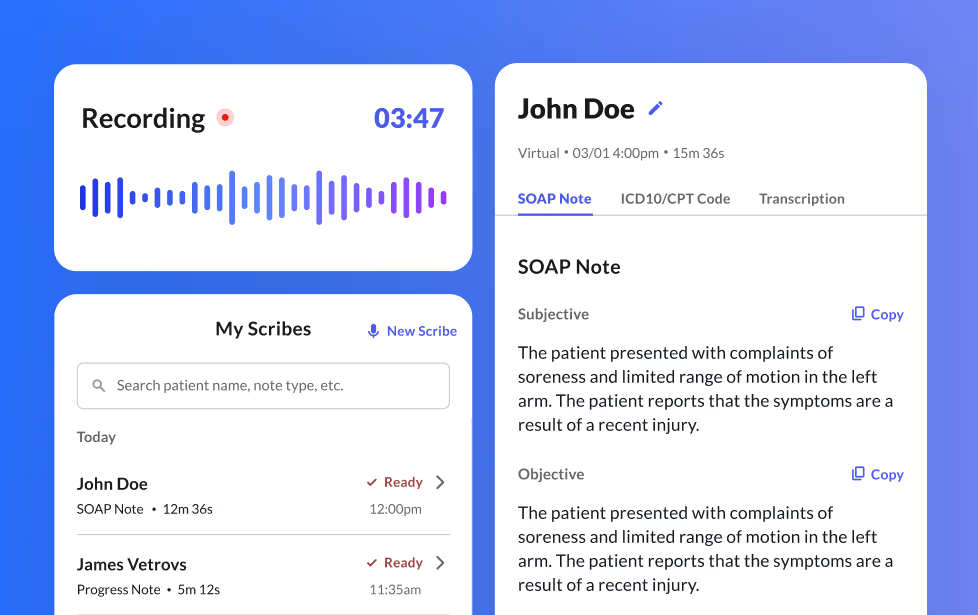
Medical scribe app interface showing a recording waveform, a list of patient notes, and a SOAP note for John Doe.

Stop looking up codes.

Scribe auto-generates them for you.

Try Commure Scribe →

At a glance

Code Family

G45: Transient cerebral ischemic attacks and related syndromes.

DRG Grouping

MS-DRG 069: Transient Ischemia without Thrombolytic, under the FY2027 MS-DRG v44 grouper. MS-DRG 061, 062 or 063 applies when a thrombolytic agent is administered.

HCC Mapping (v28)

None. G45.9 carries no CMS-HCC v28 mapping and generates no risk adjustment value on its own.

Condition

TIA

Family Specificity

Seven billable child codes split by the vascular territory the record names, with G45.9 as the residual code when no territory is stated.

Effective Date

Valid in the FY2026 code set and unchanged in the FY2027 update.

Which G45 code do I assign?

The G45 family splits on which vascular territory the documentation names, not on how severe the deficit was or how long it lasted. One question sits above the family: whether imaging showed acute infarction, which moves the encounter out of G45 and into the I63 codes.

When documentation says…
Code
Acute infarction on diffusion-weighted MRI or CT
I63.9
An infarct on imaging makes the event a stroke rather than a transient attack. Assign a code from category I63 and no code from G45. I63.9 is the residual choice when the mechanism and the vessel are not documented. The record must connect the imaging finding to the presenting deficit.
Transient deficit fully resolved, no infarction, vessel not stated
G45.9
A transient ischemic attack where the documentation does not name a territory. The inclusion terms at G45.9 are TIA, transient cerebral ischemia NOS, and spasm of cerebral artery. Use this code at the encounter where the event occurred or was worked up. An attack from an earlier encounter, documented as history with no residual deficit, is Z86.73 instead.
Vertebrobasilar insufficiency or posterior circulation TIA
G45.0
Vertebro-basilar artery syndrome. The note must place the event in the posterior circulation. Vertigo, diplopia, dysarthria or ataxia attributed to vertebrobasilar ischemia supports this code.
Hemispheric TIA in the carotid distribution
G45.1
Carotid artery syndrome, hemispheric. Assign this when the record attributes the transient deficit to the carotid distribution without naming a carotid lesion. Where the provider documents carotid occlusion or stenosis as the cause, AHA Coding Clinic directs a single code from the I65.2 subcategory and no G45 code.
Multiple or bilateral precerebral vessels involved
G45.2
Multiple and bilateral precerebral artery syndromes. The documentation must name more than one precerebral vessel or state bilateral involvement. G45.2 is a single code and carries no laterality character.
Amaurosis fugax or transient monocular blindness
G45.3
Amaurosis fugax. The documented term itself directs the code. Category H34 carries a reciprocal Excludes1 note naming amaurosis fugax. Transient retinal artery occlusion (H34.0-) and G45.3 are not reported together for the same condition.
Transient global amnesia
G45.4
Transient global amnesia, an abrupt isolated memory loss that resolves. G45.4 sits inside the transient ischemic attack family. The code carries its own Excludes1 note for amnesia NOS (R41.3). A note reading only amnesia does not support G45.4.

Tabular notes

EXCLUDES1

Category G45 carries Excludes1 notes for neonatal cerebral ischemia (P91.0) and transient retinal artery occlusion (the H34.0 codes). An Excludes1 note means the two codes are never reported together for the same condition. Category H34 carries the reciprocal note naming amaurosis fugax (G45.3). The term the provider writes decides between G45.3 and a code from the H34.0- subcategory. G45.4 carries its own Excludes1 note for amnesia NOS (R41.3). Category I65, occlusion and stenosis of precerebral arteries not resulting in cerebral infarction, carries an Excludes1 note for insufficiency, NOS, of precerebral artery (the G45 codes). AHA Coding Clinic for ICD-10-CM and ICD-10-PCS, Second Quarter 2018, Ask the Editor, applied that note to a transient ischemic attack caused by bilateral carotid stenosis. The published answer was to assign only code I65.23 and no code from category G45. The stated reason was that the cause of the precerebral insufficiency had been specified. Where the record names a precerebral lesion as the cause of the attack, code the lesion and not G45.9.

EXCLUDES2

I63.9, cerebral infarction unspecified, carries an Excludes2 note for transient cerebral ischemic attacks and related syndromes (the G45 codes). An Excludes2 note means the patient may have both conditions. Both codes may be reported when the record documents both. A single event is either a transient attack or an infarction and never both. Category I73, other peripheral vascular diseases, carries an Excludes2 note for spasm of cerebral artery (G45.9). Spasm of cerebral artery is an inclusion term at G45.9 and is not classified as a peripheral vascular disease.

FY2027: EFFECTIVE 1 OCTOBER 2026

G45.9 is unchanged in the FY2027 update. The FY2027 codes and tabular addenda add, delete or revise no code or note in category G45, category I63 or category I65.

Operational & financial impact

Why specificity matters beyond the chart: risk adjustment, DRG assignment and denial exposure all follow from which code is selected.

CMS-HCC v28 (PY2024+)

G45.9 carries no CMS-HCC v28 mapping. A transient ischemic attack is not a risk adjusting condition.

CMS is calculating 100 percent of CY2026 risk scores using the 2024 CMS-HCC model alone, the model known as v28. Source: CMS 2026 Medicare Advantage and Part D Rate Announcement.

Risk adjustment value on a transient ischemic attack encounter comes from the documented cause and the comorbidities rather than from G45.9. Cerebral infarction maps to HCC 249: Ischemic or Unspecified Stroke. Atrial fibrillation maps to HCC 238: Specified Heart Arrhythmias.

Z86.73, personal history of transient ischemic attack and cerebral infarction without residual deficits, carries no HCC either. Neither the acute attack nor its history earns a payment category.

MS-DRG ASSIGNMENT: FY2027 (V44)

MS-DRG 069: Transient Ischemia without Thrombolytic. This is the assignment for an inpatient admission with G45.9 as the principal diagnosis and no thrombolytic administered.

MS-DRG 069 sits in MDC 01, diseases and disorders of the nervous system, as a medical DRG. It has no with-CC or with-MCC companion. The severity of secondary diagnoses does not move this DRG.

MS-DRG 061: Ischemic Stroke, Precerebral Occlusion or Transient Ischemia with Thrombolytic Agent with MCC. MS-DRG 062 is the with-CC pair and MS-DRG 063 is the without-CC/MCC pair. G45.9 is on the principal diagnosis list for this triplet in v44. A thrombolytic given for a resolving deficit therefore moves the case out of MS-DRG 069.

Where the Excludes1 note at category I65 sends the encounter to a carotid code instead, the principal diagnosis changes and so does the DRG. Without a thrombolytic, I65.23 as principal diagnosis groups to MS-DRG 067, Precerebral Occlusion without Infarction with MCC, or MS-DRG 068, Precerebral Occlusion without Infarction without MCC. With one, it groups to MS-DRG 061, 062 or 063.

COVERAGE CONTEXT

There is no National Coverage Determination specific to transient ischemic attack diagnosis coding.

A documented transient ischemic attack establishes symptomatic status for carotid revascularization coverage. NCD 20.7, revised by CMS decision CAG-00085R8 effective 11 October 2023, defines symptoms to include carotid transient ischemic attack and transient monocular blindness. Coverage of carotid artery stenting requires stenosis of 50 percent or more in symptomatic patients and 70 percent or more in asymptomatic patients.

These coding and risk adjustment rules apply to Medicare Fee-for-Service and to Medicare Advantage plans using CMS-HCC v28 for payment year 2026.

WHERE SPECIFICITY IS LOST

Naming the territory does not change the DRG. G45.0 and G45.9 both group to MS-DRG 069 without a thrombolytic and to MS-DRG 061, 062 or 063 with one. Specificity here supports clinical accuracy and audit defensibility rather than DRG movement.

Assigning G45.9 when the record documents an infarct understates the encounter. The correct code, I63.9 or a more specific code from category I63, maps to HCC 249: Ischemic or Unspecified Stroke.

Assigning G45.9 at a follow up visit for an attack that has already resolved overstates the encounter. That visit is Z86.73.

Reporting G45.9 alongside a carotid code when the record names carotid stenosis as the cause of the attack conflicts with the Excludes1 note at category I65.

SEVERITY DESIGNATION (MS-DRG V44.0)

G45.9 is a CC. It appears in Appendix G, diagnoses defined as complications or comorbidities, in the ICD-10 MS-DRG Definitions Manual Version 44.0. As a secondary diagnosis it can move a case to a with-CC tier where the DRG pair offers one.

Documentation checklist to support G45.9

Chart elements that support code selection and reduce specificity-driven denials.

FAQ

Is G45.9 a billable code?

Yes. G45.9 is a complete, billable code. It has no child codes in the FY2027 tabular. No further character is available or required.

When do I use I63.9 instead of G45.9?

Use a code from category I63 when imaging shows acute infarction. A transient ischemic attack resolves without infarction by definition. Once diffusion-weighted MRI or CT demonstrates infarcted tissue the event is a stroke. I63.9 applies when the mechanism and the vessel are not documented. The record must connect the imaging finding to the presenting deficit.

Does G45.9 map to an HCC?

No. G45.9 carries no CMS-HCC v28 mapping. A transient ischemic attack generates no risk adjustment value on its own. Cerebral infarction maps to HCC 249: Ischemic or Unspecified Stroke. Atrial fibrillation maps to HCC 238: Specified Heart Arrhythmias.

Is a prior TIA coded G45.9 or Z86.73?

A prior TIA that has resolved without residual deficits is coded Z86.73. That code reads personal history of transient ischemic attack (TIA), and cerebral infarction without residual deficits. It covers an attack that has resolved and is documented as history. G45.9 belongs to the encounter at which the event occurred or was worked up. Carrying G45.9 forward on a problem list after the event has resolved is not supported.

What must the note show to support G45.9?

The note must show four things: a provider statement of a transient ischemic attack, complete resolution of the deficit, imaging showing no acute infarction, and no stated vascular territory. If the note names the territory, use G45.0, G45.1 or G45.2. If it names a precerebral lesion as the cause, the Excludes1 note at category I65 applies instead.

Can G45.9 be reported with a carotid stenosis code?

Category I65 carries an Excludes1 note for insufficiency, NOS, of precerebral artery (the G45 codes). AHA Coding Clinic, Second Quarter 2018, applied that note to a transient ischemic attack caused by bilateral carotid stenosis. The published answer directed a single code, I65.23, with no code from category G45. Where the record names a precerebral lesion as the cause of the attack, code the lesion alone. Where no cause is documented, G45.9 stands on its own.

How is an inpatient TIA admission sequenced?

G45.9 is the principal diagnosis when the transient attack was the reason for admission and no infarction was found. If the workup identifies a territory, the matching G45 code takes its place. If imaging shows infarction, the principal diagnosis becomes a code from category I63. If a precerebral lesion is documented as the cause, the Excludes1 note at I65 moves the principal diagnosis to the lesion code. Section II.B of the FY2027 Official Guidelines governs the choice where two conditions each meet the definition of principal diagnosis. Outpatient coding differs: Section IV.H bars reporting a diagnosis documented as suspected, probable or rule out, while Section II.H lets the inpatient coder report a probable diagnosis at discharge as though it were confirmed.

Did G45.9 change for FY2027?

No. G45.9 is unchanged in the FY2027 update, effective 1 October 2026. The FY2027 codes and tabular addenda add, delete or revise no code or note in category G45.

Related codes

Codes in the same family as G45.9. Only codes with a published page render as links.

Sibling codes in the G45 family

  • G45.0: Vertebro-basilar artery syndrome.
  • G45.1: Carotid artery syndrome (hemispheric).
  • G45.2: Multiple and bilateral precerebral artery syndromes.
  • G45.3: Amaurosis fugax.
  • G45.4: Transient global amnesia.
  • G45.8: Other transient cerebral ischemic attacks and related syndromes.

Additional codes to consider

Codes outside the G45 family considered alongside G45.9.

Companion: code alongside when documented

  • Z79.02: Long term (current) use of antithrombotics/antiplatelets, under Guideline I.C.21.c.3 when the drug is prescribed for long-term use.
  • Z79.82: Long term (current) use of aspirin, under the same guideline.
  • Z79.01: Long term (current) use of anticoagulants, under the same guideline.
  • E78.5: Hyperlipidemia, unspecified, permitted alongside G45.9 by the chapter 6 Excludes2 note for E00–E88.
  • E11.9: Type 2 diabetes mellitus without complications, under the same chapter 6 Excludes2 note.

Consider instead

  • I63.9: Cerebral infarction, unspecified, where imaging shows acute infarction.
  • Z86.73: Personal history of transient ischemic attack (TIA), and cerebral infarction without residual deficits, at a later encounter for a resolved attack.
  • I65.2-: Occlusion and stenosis of carotid artery, where carotid disease is documented as the cause of the attack.
  • I65.23: Occlusion and stenosis of bilateral carotid arteries.
  • I65.0-: Occlusion and stenosis of vertebral artery.
  • I65.1: Occlusion and stenosis of basilar artery.
  • H34.0-: Transient retinal artery occlusion, not reported with G45.3 for the same condition.
  • H53.12-: Transient visual loss, where the record does not support amaurosis fugax.
  • R41.3: Other amnesia, where transient global amnesia is not documented.
  • R55: Syncope and collapse.
  • G43.109: Migraine with aura, not intractable, without status migrainosus.
  • I69.30: Unspecified sequelae of cerebral infarction, where a deficit persists.
  • G46-: Vascular syndromes of brain in cerebrovascular diseases.
  • I67.82: Cerebral ischemia.

Sources

All claims on this page derive from government and professional-standards sources.

Stop looking up codes. Scribe generates them for you.

Commure Scribe listens to your visit and auto-generates billing codes, no manual lookup.