
I63.9

I63.9: Cerebral infarction, unspecified

The ICD-10-CM code for stroke when imaging or the clinical course confirms cerebral infarction but the provider has not documented the mechanism, the affected artery or the laterality.

Billable
FY2027

TABLE OF CONTENTS

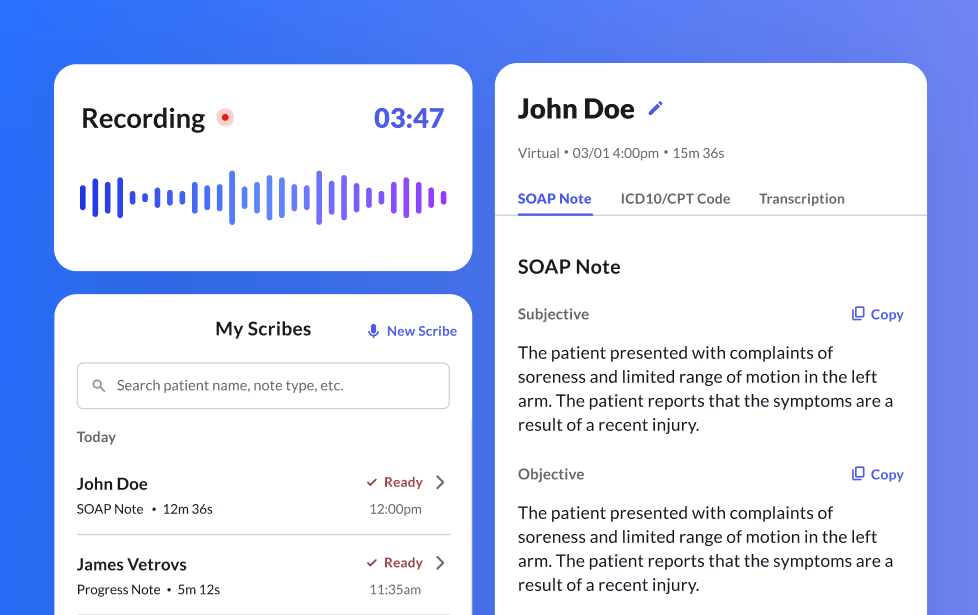
Medical scribe app interface showing a recording waveform, a list of patient notes, and a SOAP note for John Doe.

Stop looking up codes.

Scribe auto-generates them for you.

Try Commure Scribe →

At a glance

Code Family

I63: Cerebral infarction, within block I60-I69, cerebrovascular diseases, in Chapter 9, diseases of the circulatory system.

DRG Grouping

As principal inpatient diagnosis, I63.9 groups to MDC 01 under the FY2027 MS-DRG v44 grouper. With a thrombolytic agent the case groups to MS-DRG 061, 062 or 063. Without one, it groups to MS-DRG 064, 065 or 066 for intracranial hemorrhage or cerebral infarction. Grouping is driven by thrombolytic administration and the presence of MCCs or CCs.

HCC Mapping (v28)

HCC 249: Ischemic or Unspecified Stroke. The category was numbered HCC 100 under the prior v24 model.

Condition

Stroke

Family Specificity

I63.9 is the unspecified residual of category I63. The family is organized by mechanism, covering thrombosis and embolism of precerebral and cerebral arteries, cerebral venous thrombosis and other specified infarction, with artery and laterality options at the more specific codes.

Effective Date

Valid in the FY2026 code set and unchanged in the FY2027 update. Billable and valid for HIPAA-covered transactions.

Which cerebral infarction code do I assign?

Category I63 is organized by the mechanism of the infarction. What the provider documents about cause, vessel and side decides the code. I63.9 is the residual, reserved for the encounter where infarction is confirmed but mechanism and affected artery are absent from the record.

When documentation says…
Code
Infarction due to thrombosis of a cerebral artery
I63.30-I63.39
Use when the note documents thrombosis of a cerebral vessel. The record should name the artery, such as middle cerebral, anterior cerebral, posterior cerebral or cerebellar, and state laterality so the correct child code can be selected.
Infarction due to embolism of a cerebral artery
I63.40-I63.49
Use when an embolic mechanism affecting a cerebral artery is documented. The note should specify the artery and the laterality.
Infarction due to thrombosis of a precerebral artery
I63.00-I63.09
Use when thrombosis of a precerebral vessel is documented. Specify artery and laterality when the record supports it.
Infarction due to embolism of a precerebral artery
I63.10-I63.19
Use when embolism of a precerebral artery is documented. Specify artery and laterality when the record supports it.
Stroke caused by cerebral venous sinus thrombosis
I63.6
Use when cerebral venous thrombosis is the documented mechanism of the infarction.
A documented mechanism that none of the preceding subcategories covers
I63.89
Other cerebral infarction, used when the provider names a mechanism that falls outside I63.0 through I63.6. Infarction due to occlusion or stenosis of a small artery, including lacunar infarction, takes I63.81.
Infarction confirmed on MRI or CT, etiology and vascular territory not stated
I63.9
The unspecified residual, appropriate only when neither the mechanism nor the affected artery appears in the record. When mechanism, territory or laterality is documented, a more specific I63 code is available and should be used instead.

Tabular notes

EXCLUDES1 AT CATEGORY I63

Neonatal cerebral infarction (the P91.82- codes). This is a Type 1 exclude. Neonatal stroke is coded from the P91.82- family and is not reported with I63.9 for the same condition. Block I60-I69 adds an Excludes1 note for traumatic intracranial hemorrhage (the S06.- codes).

EXCLUDES2 AT CATEGORY I63

Category I63 carries Excludes2 notes for chronic, without residual deficits (sequelae) (Z86.73) and sequelae of cerebral infarction (the I69.3- codes). Code I63.9 adds its own Excludes2 note for transient cerebral ischemic attacks and related syndromes (the G45.- codes). Each excluded condition may be reported alongside I63.9 when both are documented, such as a patient with deficits from an old stroke who presents with a new acute infarction.

USE ADDITIONAL CODES

Category I63 instructs Use Additional code, if known, to identify the National Institutes of Health Stroke Scale score (the R29.7- codes). It also instructs Use Additional code, if applicable, for status post administration of tPA (rtPA) in a different facility within the last 24 hours prior to admission to current facility (Z92.82). Block I60-I69 instructs Use Additional codes to identify the presence of hypertension (I10-I1A), alcohol abuse and dependence (F10.-), exposure to environmental tobacco smoke (Z77.22), history of tobacco dependence (Z87.891), occupational exposure to environmental tobacco smoke (Z57.31), tobacco dependence (F17.-) and tobacco use (Z72.0). Report these when the documentation supports them.

FY2027 CHANGES

The FY2027 codes addenda make no addition, deletion or revision in category I63, and the I63 and I63.9 notes are unchanged. FY2027 revises the Code first note at R29.7, the NIHSS score, to list I60.-, I61.- and I62.- alongside the I63.- codes. Under Guideline I.C.9.d, a prior stroke with no new acute event takes an I69.3- code for neurologic deficits that persist. Guideline I.C.9.d.3 bars I69 codes when the patient has no neurologic deficits.

Operational & financial impact

Why specificity matters beyond the chart: risk adjustment, DRG assignment and denial exposure all follow from which code is selected.

CMS-HCC v28 (PY2024+)

HCC 249: Ischemic or Unspecified Stroke. I63.9 maps to HCC 249 in CMS-HCC Model Version 28.

For Medicare Advantage risk adjustment, the stroke diagnosis must be documented in the medical record each payment year with evidence of active clinical management. Prior-year documentation alone does not recapture the HCC.

V24 TO V28 TRANSITION

CMS-HCC v28 renumbered the stroke category from HCC 100 under v24 to HCC 249.

MS-DRG ASSIGNMENT (FY2027, V44)

As principal inpatient diagnosis, I63.9 groups to the MDC 01 cerebrovascular MS-DRGs under the FY2027 MS-DRG v44 grouper. The thrombolytic family is MS-DRG 061, 062 and 063, Ischemic Stroke, Precerebral Occlusion or Transient Ischemia with Thrombolytic Agent with MCC, with CC and without CC/MCC. The second family is MS-DRG 064, 065 and 066, Intracranial Hemorrhage or Cerebral Infarction with MCC, with CC or tPA in 24 Hours and without CC/MCC. Which one applies is driven by thrombolytic agent administration, the presence of MCCs or CCs, and the full code set on the claim.

MEDICARE AND PAYER COVERAGE

I63.9 is a valid diagnosis code for Medicare Part A and Part B claims.

WHERE SPECIFICITY IS LOST

Two selections put a stroke claim at odds with the record: carrying I63.9 forward to outpatient follow-up encounters where I69.3- applies. Defaulting to I63.9 when the note already documents a mechanism, a vascular territory or a side.

Documentation checklist to support I63.9

Chart elements that support code selection and reduce specificity-driven denials.

FAQ

Should I63.9 or I69.3- be used for a patient who had a stroke three months ago and presents for neurology follow-up?

Use I69.3-, sequelae of cerebral infarction, per ICD-10-CM Guideline I.C.9.d. At post-acute outpatient encounters where no new stroke is occurring, the sequela code replaces I63.9 when neurologic deficits persist. When no deficits remain, Guideline I.C.9.d.3 bars I69 codes and Z86.73 applies. I63.9 is reserved for the acute stroke encounter.

Can I63.9 and I69.3- appear on the same claim?

The Excludes2 relationship between category I63 and I69.3- means the two may be reported together when both conditions exist. An example is a patient with sequelae of a prior stroke who presents with a new acute stroke. Outside that scenario the two codes serve different temporal purposes and would not normally appear together on an outpatient claim.

How is I63.9 distinguished from a transient ischemic attack?

TIA is coded to G45.9. I63.9 is assigned when the provider documents a cerebral infarction or stroke without further detail, and the Index sends Stroke to I63.9. Code I63.9 carries an Excludes2 note for transient cerebral ischemic attacks and related syndromes (the G45.- codes). When the provider documents an infarction without a mechanism, I63.9 applies.

Does I63.9 carry risk adjustment weight?

Yes. I63.9 maps to HCC 249, Ischemic or Unspecified Stroke, in CMS-HCC v28. The category was numbered HCC 100 under v24. For Medicare Advantage, the diagnosis must be documented with active clinical management every payment year to be recaptured.

Which additional codes does the tabular expect alongside I63.9?

Category I63 instructs Use Additional code, if known, for the National Institutes of Health Stroke Scale score (the R29.7- codes). It also instructs Use Additional code, if applicable, for status post administration of tPA (rtPA) in a different facility within the last 24 hours prior to admission to current facility (Z92.82). Block I60-I69 instructs Use Additional codes to identify hypertension (I10-I1A), alcohol abuse and dependence (F10.-), exposure to environmental tobacco smoke (Z77.22), history of tobacco dependence (Z87.891), occupational exposure to environmental tobacco smoke (Z57.31), tobacco dependence (F17.-) and tobacco use (Z72.0).

When does a more specific I63 code replace I63.9?

A more specific I63 code replaces I63.9 whenever the provider documents the stroke mechanism, whether thrombotic, embolic or lacunar, the affected vascular territory, or the laterality. Codes I63.0 through I63.89 carry that detail. Lacunar infarction, for example, takes I63.81.

Can I63.9 be used for a stroke in a newborn?

No. Category I63 carries an Excludes1 note for neonatal cerebral infarction (P91.82-), which applies to I63.9. The two are not reported together for the same condition. Neonatal stroke is coded from the P91.82- codes. The Index sends Infarct, cerebral, neonatal to the same subcategory.

Related codes

Codes in the same family as I63.9. Only codes with a published page render as links.

Sibling codes in the I63 family

  • I63.0-: Cerebral infarction due to thrombosis of precerebral arteries.
  • I63.1-: Cerebral infarction due to embolism of precerebral arteries.
  • I63.3-: Cerebral infarction due to thrombosis of cerebral arteries.
  • I63.4-: Cerebral infarction due to embolism of cerebral arteries.
  • I63.6: Cerebral infarction due to cerebral venous thrombosis, nonpyogenic.
  • I63.81: Other cerebral infarction due to occlusion or stenosis of small artery.
  • I63.89: Other cerebral infarction.
  • I63.9: Cerebral infarction, unspecified.

Additional codes to consider

Codes outside the I63 family considered alongside I63.9.

Companion: code alongside when documented

  • R29.7-: National Institutes of Health Stroke Scale (NIHSS) score, reported per the tabular Use Additional instruction using the score documented at admission.
  • I10: Essential (primary) hypertension, when hypertension is a documented comorbidity.
  • F17-: Nicotine dependence, when tobacco dependence is documented.
  • Z72.0: Tobacco use, when documented.
  • F10-: Alcohol related disorders, when alcohol abuse or dependence is documented.
  • Z77.22: Contact with and (suspected) exposure to environmental tobacco smoke (acute) (chronic), when documented.
  • Z87.891: Personal history of nicotine dependence, when documented.

Consider instead

  • I69.3-: Sequelae of cerebral infarction, at post-acute outpatient follow-up when no new acute stroke is occurring.
  • Z86.73: Personal history of transient ischemic attack (TIA), and cerebral infarction without residual deficits.
  • G45.9: Transient cerebral ischemic attack, unspecified, when symptoms were transient and infarction was not confirmed.
  • P91.82-: Neonatal cerebral infarction, for stroke in the newborn.
  • I63.0- through I63.8: The mechanism-specific and territory-specific cerebral infarction codes, whenever the record documents cause, vessel or laterality.

Sources

All claims on this page derive from government and professional-standards sources.

Stop looking up codes. Scribe generates them for you.

Commure Scribe listens to your visit and auto-generates billing codes, no manual lookup.