
Z86.73

Z86.73: Personal history of transient ischemic attack (TIA), and cerebral infarction without residual deficits

The ICD-10-CM code for a prior TIA or cerebral infarction that has fully resolved, reported as a secondary diagnosis when no residual neurological deficit remains.
Billable
FY2027

TABLE OF CONTENTS

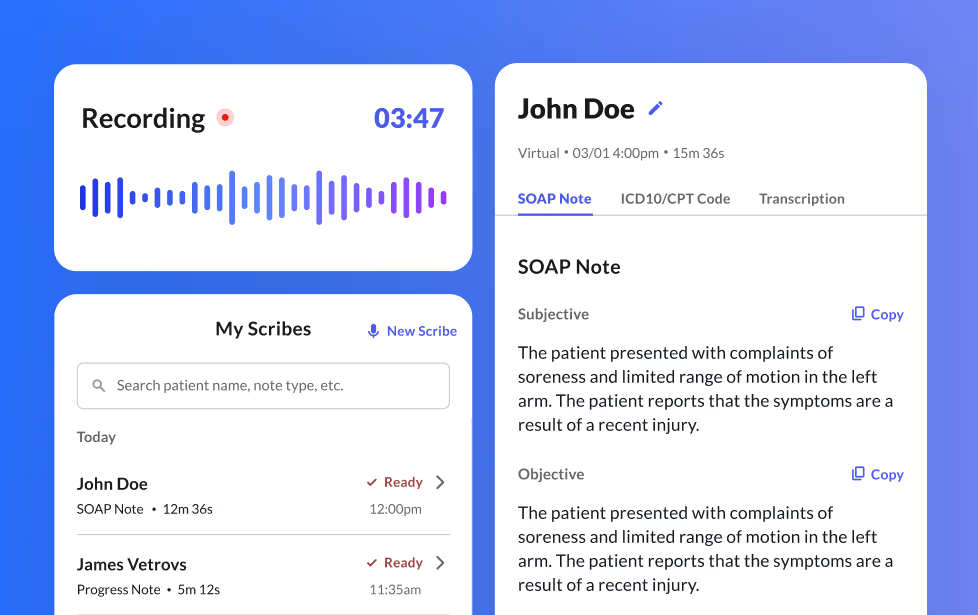
Medical scribe app interface showing a recording waveform, a list of patient notes, and a SOAP note for John Doe.

Stop looking up codes.

Scribe auto-generates them for you.

Try Commure Scribe →

At a glance

Code Family

Z86.7: Personal history of diseases of the circulatory system, in block Z77-Z99 within Chapter 21.

DRG Grouping

Guideline I.C.21.c.4 makes history codes acceptable on any medical record regardless of the reason for the visit. Submitted as the principal diagnosis, Z86.73 groups to MS-DRG 951, Other Factors Influencing Health Status, in MDC 23 under the FY2027 MS-DRG v44 grouper. As a secondary diagnosis it does not function as a CC or an MCC.

HCC Mapping (v28)

None. Z86.73 maps to no HCC category in CMS-HCC v28, and it mapped to none under the prior v24 model.

Condition

Stroke history

Family Specificity

Subcategory Z86.7 is split by the type of prior circulatory event. Z86.73 is the member reserved for a prior TIA or cerebral infarction that resolved without residual deficits.

Billable

Yes, and valid for HIPAA-covered transactions. Valid in the FY2026 code set and unchanged in the FY2027 update.

Which stroke history code do I assign?

The choice here does not turn on how severe the original event was. It turns on whether the event is active or past, whether any neurological deficit persists, and whether the history belongs to the patient or to a relative.

When documentation says…
Code
Prior stroke in 2019, full recovery, no residual deficits
Z86.73
Personal history of TIA or cerebral infarction that has resolved. The note must record the prior event and confirm that no neurological deficit remains. The code is reported in the secondary position only.
Prior stroke with persistent right-sided weakness
I69.3-
Sequelae of cerebral infarction. Any deficit that persists, such as hemiplegia, aphasia, dysphagia or cognitive impairment, directs the encounter to the I69.3- codes with the applicable deficit code. Z86.73 does not apply while a deficit remains. Its Excludes1 note names sequelae of cerebrovascular disease (the I69 codes).
Acute ischemic stroke confirmed on imaging at this encounter
I63.9
Cerebral infarction, unspecified, for an active stroke encounter where the mechanism and the affected artery are not documented. Z86.73 does not substitute for the active stroke code. Category I63 carries an Excludes2 note for Z86.73. Z86.73 may be reported additionally when a separate, fully resolved prior event is also documented.
Transient neurological symptoms at this encounter, no infarction on imaging
G45.9
Transient cerebral ischemic attack, unspecified, for a TIA that is active at the encounter. Z86.73 applies only once that TIA is documented as a past event that has resolved.
Stroke in the patient's father and sister
Z82.3
Family history of stroke. Z86.73 records the patient's own history, and the two codes are not interchangeable.
Prior deep vein thrombosis or pulmonary embolism
Z86.71-
Personal history of venous thrombosis and embolism, the Z86.7 sibling for a prior venous event. Z86.73 is limited to prior TIA and prior cerebral infarction.

Tabular notes

EXCLUDES1 AND SEQUENCING

Z86.73 carries an Excludes1 note for personal history of traumatic brain injury (Z87.820) and sequelae of cerebrovascular disease (the I69 codes). A persisting deficit from the prior stroke is coded to the I69 codes instead. Guideline I.C.9.d.3 bars I69 codes when the patient has no neurologic deficits. Subcategory Z86.7 carries an Excludes2 note for old myocardial infarction (I25.2), personal history of anaphylactic shock (Z87.892) and postmyocardial infarction syndrome (I24.1). Guideline I.C.21.c.4 says personal history codes explain a past medical condition that no longer exists and is not receiving any treatment but may recur and require continued monitoring. At a follow-up visit after completed treatment, Guideline I.C.21.c.8 sequences the follow-up code first, followed by the history code.

CODE FIRST AND CODE ALSO

Z86.73 carries no Use Additional, Code First or Code Also note of its own. Category Z86 carries a Code first note for any follow-up examination after treatment (Z09). Block Z77-Z99 carries a Code also note for any follow-up examination (Z08-Z09). Long term anticoagulant or antiplatelet therapy, when documented, is coded from category Z79 under Guideline I.C.21.c.3.

FY2027: EFFECTIVE 1 OCTOBER 2026

The FY2027 codes addenda add Z86.17, Personal history of Clostridioides difficile infection, in subcategory Z86.1. They make no change in subcategory Z86.7. The FY2027 tabular addenda change no note at Z86.73. Z86.73 is in the FY2027 billable code list and is unchanged in the FY2027 update.

Operational & financial impact

Why specificity matters beyond the chart: risk adjustment, DRG assignment and denial exposure all follow from which code is selected.

CMS-HCC v28 (PY2024+)

Z86.73 maps to no HCC category in CMS-HCC v28. It makes no direct contribution to a risk adjustment factor score.

The risk adjustment weight sits in the conditions documented alongside the history rather than in the history code. Atrial fibrillation reported from the I48.- family carries HCC weight in v28 and should be captured when the provider documents it.

Z86.73 documents cerebrovascular history that supports the medical necessity of ongoing secondary prevention and of neuroimaging.

V24 TO V28 TRANSITION

Z86.73 mapped to no HCC category under CMS-HCC v24 either. The move from v24 to v28 did not change its risk adjustment status.

MS-DRG v44 (FY2027)

Guideline I.C.21.c.4 makes history codes acceptable on any medical record regardless of the reason for the visit. Submitted as the principal diagnosis, Z86.73 groups to MS-DRG 951, Other Factors Influencing Health Status, in MDC 23.

Reported as a secondary diagnosis, Z86.73 does not function as a CC or an MCC. It does not move the DRG tier on its own.

The MS-DRG follows from the principal diagnosis for the encounter. Z86.73 is reported additionally to capture the relevant past medical history.

MEDICARE AND COMMERCIAL PAYERS

Under Medicare, Z86.73 supports medical necessity for secondary stroke prevention medication, for carotid duplex ultrasound surveillance and for neurology follow-up. The history code documents risk.

WHERE SPECIFICITY IS LOST

Two selections put a stroke history claim at odds with the record. The first is assigning Z86.73 when the note documents a residual neurological deficit, which belongs to the I69.3- codes. The second is submitting Z86.73 as the principal diagnosis in place of the condition or service that prompted the encounter. That case groups to MS-DRG 951.

Documentation checklist to support Z86.73

Chart elements that support code selection and reduce specificity-driven denials.

FAQ

Can Z86.73 be used as a principal diagnosis?

Not ahead of the reason for the encounter. Guideline I.C.21.c.4 says personal history codes explain a past medical condition that no longer exists and is not receiving any treatment but may recur and require continued monitoring. For an encounter such as screening or counseling, the guideline sequences the reason for the encounter first and the history code as an additional diagnosis. At a follow-up visit after completed treatment, Guideline I.C.21.c.8 sequences the follow-up code first, followed by the history code.

When does I69.3- replace Z86.73?

The I69.3- codes replace Z86.73 whenever a neurological deficit from the prior stroke persists. Hemiplegia, aphasia, dysphagia and cognitive impairment each direct the encounter to the I69.3- codes with the applicable deficit code. Z86.73 carries an Excludes1 note for sequelae of cerebrovascular disease (I69.-) and is reserved for a prior TIA or cerebral infarction that resolved completely.

Should Z86.73 be used if the patient had a stroke ten years ago and recovered fully?

Yes. Z86.73 is appropriate as a secondary code where the provider documents the prior stroke or TIA in the relevant past medical history and no residual deficit remains. It applies at any encounter where that history bears on management, such as anticoagulation management or cardiovascular risk assessment.

Can Z86.73 and I63.9 appear on the same claim?

Yes. Z86.73 and I63.9 can appear on the same claim in one scenario. Category I63 carries an Excludes2 note naming Z86.73, and an Excludes2 note permits dual coding. A patient whose earlier stroke resolved without deficits, and who now presents with a new acute infarction, may carry the active I63 code and Z86.73 together. Z86.73 never stands in place of the active stroke code.

Is Z86.73 used for a TIA the patient is having now?

No. An active TIA at the encounter is coded to G45.9, transient cerebral ischemic attack, unspecified. Z86.73 applies to a TIA documented as a past event that has since resolved. The two should not be conflated.

Does Z86.73 carry risk adjustment weight?

No. Z86.73 maps to no HCC category in CMS-HCC v28, and it mapped to none under v24. The weight sits in the conditions documented alongside the history, such as atrial fibrillation reported from the I48.- family.

Does Z86.73 affect the MS-DRG?

Not as a secondary diagnosis. Guideline I.C.21.c.4 makes history codes acceptable on any medical record regardless of the reason for the visit. As a secondary diagnosis Z86.73 does not function as a CC or an MCC. It does not move the DRG tier under the FY2027 MS-DRG v44 grouper. Submitted as the principal diagnosis, Z86.73 groups to MS-DRG 951, Other Factors Influencing Health Status, in MDC 23.

What changed for Z86.73 in FY2027?

Z86.73 is unchanged in the FY2027 update, effective 1 October 2026. In category Z86, FY2027 adds Z86.17, Personal history of Clostridioides difficile infection. Subcategory Z86.7 is unchanged.

Related codes

Codes in the same family as Z86.73. Only codes with a published page render as links.

Sibling codes in the Z86.7 family

  • Z86.71-: Personal history of venous thrombosis and embolism.
  • Z86.72: Personal history of thrombophlebitis.
  • Z86.73: Personal history of transient ischemic attack (TIA), and cerebral infarction without residual deficits.
  • Z86.74: Personal history of sudden cardiac arrest.
  • Z86.79: Personal history of other diseases of the circulatory system.

Additional codes to consider

Codes outside the Z86.7 family considered alongside Z86.73.

Consider instead

  • I69.3-: Sequelae of cerebral infarction, when any residual neurological deficit from the prior stroke persists.
  • I63.9: Cerebral infarction, unspecified, for an acute ischemic stroke at the current encounter.
  • G45.9: Transient cerebral ischemic attack, unspecified, for a TIA that is active at the encounter.
  • Z82.3: Family history of stroke, when the cerebrovascular history belongs to a relative rather than to the patient.

Sources

All claims on this page derive from government and professional-standards sources.

Stop looking up codes. Scribe generates them for you.

Commure Scribe listens to your visit and auto-generates billing codes, no manual lookup.