
N39.41

N39.41: Urge incontinence

The ICD-10-CM code for urge incontinence is N39.41, assigned when the record documents involuntary loss of urine preceded by a sudden urge to void, with no stress component recorded at the same encounter.

Billable
FY2027

TABLE OF CONTENTS

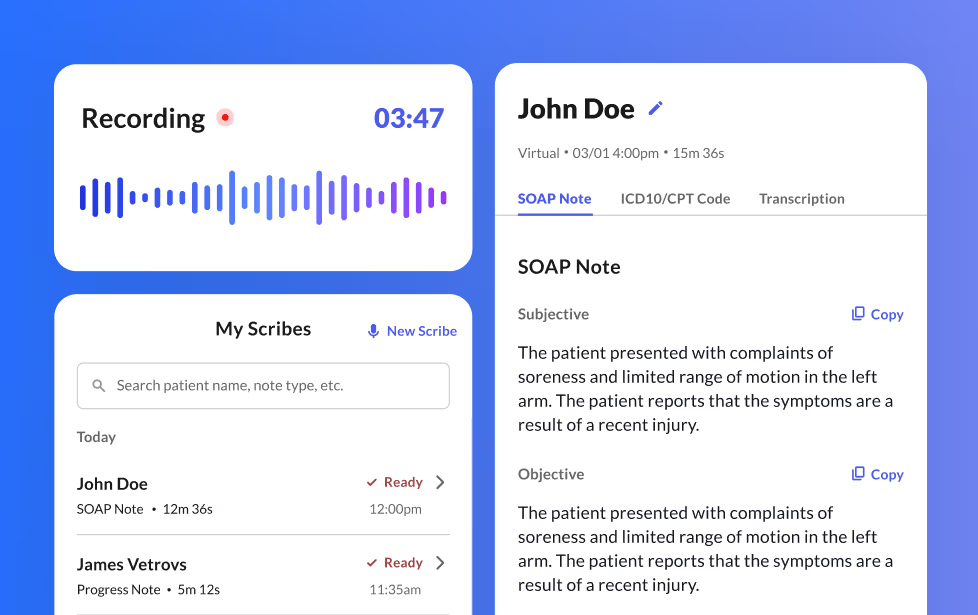
Medical scribe app interface showing a recording waveform, a list of patient notes, and a SOAP note for John Doe.

Stop looking up codes.

Scribe auto-generates them for you.

Try Commure Scribe →

At a glance

Code Family

N39.4: Other specified urinary incontinence.

DRG Grouping

MS-DRG 695 with MCC or MS-DRG 696 without MCC, Kidney and urinary tract signs and symptoms, MDC 11, under the FY2027 MS-DRG v44 grouper.

HCC Mapping (v28)

None. No code in category N39 appears in the CMS-HCC v28 diagnosis to HCC crosswalk distributed with the CMS-HCC model software.

Condition

Urge incontinence

Family Specificity

Ten billable codes sit under N39.4, split by the documented mechanism of the leak. N39.46 is reserved for stress and urge documented together.

Effective Date

Valid in the FY2026 code set and unchanged in the FY2027 update.

Which N39.4 code do I assign?

The N39.4 subcategory splits on the documented mechanism of the leak rather than on its volume or frequency. Assign N39.41 only where urgency is the stated mechanism and no stress component appears in the record.

When documentation says…
Code
Sudden urge to void with leakage before reaching the toilet
N39.41
Urge incontinence as the documented type. The note must record an actual involuntary loss of urine, not urgency on its own.
Leaks with coughing and lifting, and also leaks with sudden urgency
N39.46
Mixed incontinence, whose inclusion term is urge and stress incontinence. An Excludes1 note at N39.41 bars reporting N39.41 alongside N39.46 for the same condition. Documented mixed symptoms take N39.46 by itself.
Leakage only on coughing, sneezing, laughing or lifting
N39.3
Stress incontinence (female) (male), which sits in category N39 outside the N39.4 subcategory. N39.3 carries its own Excludes1 note against N39.46.
Urinary incontinence, type not documented
R32
Unspecified urinary incontinence, the fallback until the provider states a type. An Excludes1 note at R32 bars reporting it with stress incontinence or with any of the N39.4 codes for the same condition.
Overactive bladder with urgency and frequency, no episode of leakage
N32.81
Overactive bladder, reported on its own when no leakage is documented. Urgency without an overactive bladder diagnosis indexes to R39.15, urgency of urination, which carries an Excludes1 note against N39.41 and N39.46.
Nightly bedwetting with an organic cause identified
N39.44
Nocturnal enuresis. Enuresis of nonorganic origin is excluded from N39.4 and goes to F98.0 instead.
Continuous dribbling from a chronically distended bladder
N39.490
Overflow incontinence, the N39.49 child for leakage secondary to incomplete emptying. The Index sends Incontinence, urine, overflow to N39.490.

Tabular notes

EXCLUDES1

N39.41 carries one Excludes1 note of its own: mixed incontinence (N39.46). The two are not reported together for the same condition. The parent subcategory N39.4 carries a further five Excludes1 entries that apply to N39.41 as a child code: enuresis NOS (R32), functional urinary incontinence (R39.81), urinary incontinence associated with cognitive impairment (R39.81), urinary incontinence NOS (R32), and urinary incontinence of nonorganic origin (F98.0). Two of those exclusions run in the reverse direction as well. R32 carries an Excludes1 for "stress incontinence and other specified urinary incontinence (N39.3-N39.4-)", and R39.81 carries the same entry. R39.15, urgency of urination, carries an Excludes1 for urge incontinence (N39.41, N39.46).

EXCLUDES2

Neither N39.41 nor N39.4 carries an Excludes2 note. The Excludes2 note at the N39 category level concerns hematuria and proteinuria rather than incontinence: hematuria NOS (R31.-), recurrent or persistent hematuria (N02.-), recurrent or persistent hematuria with specified morphological lesion (N02.-), and proteinuria NOS (the R80 codes). The block heading N30-N39 carries a separate Excludes2 for urinary infection complicating abortion, ectopic or molar pregnancy and complicating pregnancy, childbirth and the puerperium.

CODE ALSO

Code also any associated overactive bladder (N32.81). The note sits at N39.4 and applies to N39.41. A Code also instruction means both codes may be needed and gives no sequencing direction. The circumstances of the encounter decide which is reported first. N39.3 carries the identical Code also entry.

FY2027: EFFECTIVE 1 OCTOBER 2026

N39.41 was valid in the FY2026 code set and is unchanged in the FY2027 update. The FY2027 codes addenda add or delete no code in subcategory N39.4. The FY2027 tabular addenda leave the Excludes1 and Code also notes at N39.41 and N39.4 unchanged. Subcategory N39.4 still holds ten billable codes.

Operational & financial impact

Why specificity matters beyond the chart: risk adjustment, DRG assignment and denial exposure all follow from which code is selected.

CMS-HCC v28 (PY2024+)

N39.41 maps to no HCC. The diagnosis to HCC crosswalk distributed with the CMS-HCC v28 model software contains no entry for N39.41.

The same crosswalk contains no entry for any other code in category N39. N39.42, N39.43, N39.44, N39.45, N39.46, N39.490, N39.491, N39.492, N39.498, N39.3 and N39.0 all map to no HCC under v28.

N32.81, R32, N40.1, N99.89 and every code in category N31 are likewise absent from the v28 crosswalk.

Risk adjustment capture is therefore not the reason to code the incontinence type. Specificity here pays through medical necessity and through the acute inpatient grouper.

MS-DRG v44 (FY2027)

MS-DRG 695: Kidney and urinary tract signs and symptoms with MCC.

MS-DRG 696: Kidney and urinary tract signs and symptoms without MCC.

Both sit in MDC 11, Diseases and Disorders of the Kidney and Urinary Tract. An inpatient stay with N39.41 as the principal diagnosis groups to that pair under the FY2027 MS-DRG v44 grouper. The split between 695 and 696 is driven by the secondary diagnoses on the claim, not by the choice between N39.41 and its siblings.

Medicare and commercial payers

National Coverage Determination 230.18, Sacral Nerve Stimulation For Urinary Incontinence, effective 1 January 2002, covers urinary urge incontinence, urgency-frequency syndrome and urinary retention. Patients with stress incontinence, urinary obstruction and specific neurologic diseases producing secondary manifestations of those conditions are excluded from coverage.

The NCD requires that the patient be refractory to conventional therapy, defined as documented behavioral, pharmacologic or surgical corrective therapy. It also requires a test stimulation that produces 50 percent or greater improvement measured through voiding diaries.

Noridian billing and coding article A53359, Billing and Coding: Sacral Nerve Stimulation for Urinary and Fecal Incontinence, revision effective 6 April 2026, lists N39.41, N39.42, N39.46, N39.490, N39.492 and N39.498 among the ICD-10-CM codes that support medical necessity. N39.3, N32.81 and R39.81 do not appear on that list.

WHERE SPECIFICITY IS LOST

Documented mixed symptoms coded N39.41 alone. The record shows leakage on exertion as well as leakage with urgency, and only the urge component reaches the claim. The Excludes1 note at N39.41 makes this an incorrect assignment rather than an incomplete one, because N39.46 already carries both components in a single code.

Documented mixed symptoms coded N39.3 alone. This is the version that also loses coverage. N39.3 is absent from the A53359 medical necessity list and stress incontinence is an explicit exclusion under NCD 230.18.

R32 left in place after the type is documented. R32 is the correct code only until the provider states a type. Once urge incontinence appears in the note, the Excludes1 note at R32 makes N39.41 the required code.

Overactive bladder reported without the incontinence code. Where leakage is documented, the Code also note at N39.4 directs that N32.81 and N39.41 both be reported. N32.81 is not on the A53359 medical necessity list. N32.81 on its own does not support a sacral nerve stimulation claim.

Incontinence reported without the condition that causes it. N31 carries a Use additional code note for the associated urinary incontinence. N40.1 lists urinary incontinence among the associated symptoms to code additionally. Dropping the causal code inverts the intended sequence.

Documentation checklist to support N39.41

Chart elements that support code selection and reduce specificity-driven denials.

FAQ

Is N39.41 a billable code?

Yes. N39.41 is a five character code with no further subdivision beneath it. It is complete and valid for submission. Its parent N39.4 and its sibling N39.49 are headings that carry further children, and neither is billable on its own.

What does the note have to say to support N39.41?

The note has to document involuntary loss of urine and identify urgency as the mechanism. Urgency, frequency or a feeling of needing to void, with no leakage recorded, does not reach N39.41. It also has to be silent on, or negative for, leakage with exertion, because documented stress leakage alongside urge leakage moves the encounter to N39.46.

When does N39.46 replace N39.41?

N39.46 replaces N39.41 whenever the record documents both stress and urge incontinence. N39.41 carries an Excludes1 note for mixed incontinence (N39.46), and Excludes1 means the two are not reported together for the same condition. N39.46 carries the inclusion term urge and stress incontinence. The single code already conveys both. Reporting N39.41 and N39.3 as a pair is also incorrect. The Index sends Incontinence, urine, urge, and stress to N39.46.

Where does R32 fit once urge incontinence is documented?

It drops out. R32, unspecified urinary incontinence, is the fallback code for incontinence with no documented type. Its Excludes1 note names "stress incontinence and other specified urinary incontinence (N39.3-N39.4-)". R32 is not reported alongside N39.41 for the same condition. Once the provider states urge, N39.41 displaces R32 entirely.

Is overactive bladder N32.81 reported with N39.41 or instead of it?

It depends on whether leakage is documented. N39.4 carries a Code also note for any associated overactive bladder (N32.81). Where the record documents overactive bladder and an episode of leakage, both N32.81 and N39.41 are reported. Where the record documents overactive bladder with no leakage, N32.81 is reported on its own. Urgency alone indexes to R39.15. A Code also note gives no sequencing direction. The reason for the encounter decides which code leads.

Does N39.41 map to a CMS-HCC v28 HCC?

No. The diagnosis to HCC crosswalk distributed with the CMS-HCC v28 model software contains no entry for N39.41. No code in category N39 maps to a v28 HCC, and neither do N32.81, R32, N40.1 or any code in category N31. CC and MCC status is a separate question from HCC mapping and is decided by the MS-DRG Definitions Manual rather than by the risk adjustment model.

How is N39.41 sequenced, and does the answer change between inpatient and outpatient?

The tabular puts the causal condition first. N31 carries a Use additional code note directing the coder to identify any associated urinary incontinence, and N40.1 lists urinary incontinence among the associated symptoms to code additionally. Neurogenic bladder and benign prostatic hyperplasia with lower urinary tract symptoms both sequence ahead of N39.41 when documented. On the inpatient side, principal diagnosis selection follows the condition established after study as chiefly responsible for the admission, and N39.41 as principal diagnosis groups to MS-DRG 695 or 696. On the outpatient side, only confirmed diagnoses are coded. A suspected or probable urge component is not assigned and the documented symptom code is used instead.

Did anything change for N39.41 in FY2027?

No. N39.41 was valid in the FY2026 code set and is unchanged in the FY2027 update, effective 1 October 2026. The FY2027 addenda add or delete no code in subcategory N39.4 and leave its Excludes1 and Code also notes unchanged.

Related codes

Codes in the same family as N39.41. Only codes with a published page render as links.

Sibling codes in the N39.4 family

  • N39.42: Incontinence without sensory awareness.
  • N39.43: Post-void dribbling.
  • N39.44: Nocturnal enuresis.
  • N39.45: Continuous leakage.
  • N39.46: Mixed incontinence.
  • N39.490: Overflow incontinence.
  • N39.491: Coital incontinence.
  • N39.492: Postural (urinary) incontinence.
  • N39.498: Other specified urinary incontinence.

Additional codes to consider

Codes outside the N39.4 family considered alongside N39.41.

Companion: code alongside when documented

  • N32.81: Overactive bladder, named in the Code also note at N39.4 and reported with N39.41 when leakage is documented.
  • N31.0: Uninhibited neuropathic bladder, not elsewhere classified, which sequences first under the Use additional code note at N31.
  • N31.1: Reflex neuropathic bladder, not elsewhere classified.
  • N31.2: Flaccid neuropathic bladder, not elsewhere classified.
  • N31.9: Neuromuscular dysfunction of bladder, unspecified.
  • N40.1: Benign prostatic hyperplasia with lower urinary tract symptoms, which lists urinary incontinence among the symptoms to code additionally.

Consider instead

  • N39.46: Mixed incontinence, required by the Excludes1 note at N39.41 whenever stress and urge are both documented.
  • N39.3: Stress incontinence (female) (male), where leakage occurs only on exertion.
  • R32: Unspecified urinary incontinence, where no type is documented.
  • N32.81: Overactive bladder, where urgency and frequency are documented with no leakage.
  • R39.15: Urgency of urination, which carries an Excludes1 note against N39.41 and N39.46.
  • R39.81: Functional urinary incontinence, for incontinence due to cognitive impairment, severe physical disability or immobility.
  • F98.0: Enuresis not due to a substance or known physiological condition, for incontinence of nonorganic origin.
  • N39.490: Overflow incontinence, where the leak follows incomplete bladder emptying.
  • N36.42: Intrinsic sphincter deficiency (ISD), whose Use additional code note at N36.4 points to N39.3 rather than to the N39.4 codes.

Sources

All claims on this page derive from government and professional-standards sources.

Stop looking up codes. Scribe generates them for you.

Commure Scribe listens to your visit and auto-generates billing codes, no manual lookup.