
K52.9

K52.9: Noninfective gastroenteritis and colitis, unspecified

The ICD-10-CM code for colitis documented with no infectious cause and no named type. It carries Colitis NOS as an inclusion term and is the Alphabetic Index default for the main term Colitis.

Billable
FY2027

TABLE OF CONTENTS

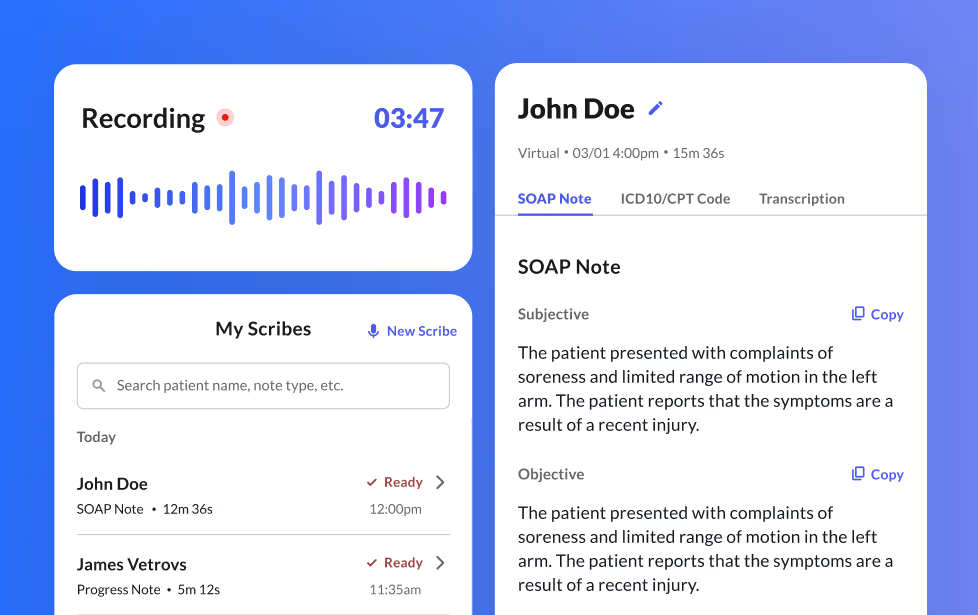
Medical scribe app interface showing a recording waveform, a list of patient notes, and a SOAP note for John Doe.

Stop looking up codes.

Scribe auto-generates them for you.

Try Commure Scribe →

At a glance

Code Family

K52: Other and unspecified noninfective gastroenteritis and colitis.

DRG Grouping

MS-DRG 391 or 392 under the FY2027 MS-DRG v44 grouper, depending on the presence of an MCC.

HCC Mapping (v28)

None. K52.9 carries no CMS-HCC v28 category.

Condition

Colitis

Family Specificity

Fourteen billable codes in category K52, split by cause rather than by severity or site, with K52.9 as the residual for colitis of unstated cause.

Billable

Yes. K52.9 is valid for submission at the fourth character. It is valid in the FY2026 code set and unchanged in the FY2027 update.

Which K52 code do I assign?

Category K52 splits on the cause of the inflammation rather than on its severity or its site. The largest fork sits outside the category altogether, since infective colitis codes to A09 or to a named organism code such as A04.7-, which leaves K52 for noninfective causes only.

When documentation says…
Code
Infectious colitis, no organism identified
A09
Infectious gastroenteritis and colitis, unspecified. Infectious colitis NOS is an inclusion term at A09. A09 and K52.9 carry reciprocal Excludes1 notes, which means the two are not reported together for the same condition.
Pseudomembranous colitis, Clostridioides difficile toxin positive
A04.72
Enterocolitis due to Clostridium difficile, not specified as recurrent. Clostridioides difficile colitis and pseudomembraneous colitis are both inclusion terms at A04.7. Assign A04.71 instead when the record states that the episode is recurrent.
Ulcerative colitis
K51.90
Ulcerative colitis, unspecified, without complications, the residual code of the K51 family. The K51 codes are subdivided first by extent such as pancolitis, proctitis, rectosigmoiditis and left sided colitis, then by complication. Ulcerative colitis has its own page in this library. A documented ulcerative colitis diagnosis displaces K52.9 rather than accompanying it.
Indeterminate colitis, cannot distinguish ulcerative colitis from Crohn disease
K52.3
Indeterminate colitis, for colonic inflammatory bowel disease that cannot be classified as either. Colonic inflammatory bowel disease unclassified is an inclusion term at K52.3. K52.3 carries an Excludes1 note for unspecified colitis, which means K52.3 and K52.9 are not reported together for the same condition.
Chronic watery diarrhea, normal colonoscopy, biopsy diagnostic of microscopic colitis
K52.839
Microscopic colitis, unspecified, for a biopsy-confirmed microscopic colitis whose subtype the pathology report does not name. Microscopic colitis is a histologic diagnosis rather than an endoscopic one. Assign K52.831 for collagenous colitis, K52.832 for lymphocytic colitis and K52.838 for another named microscopic subtype.
Ischemic colitis
K55.9
Vascular disorder of intestine, unspecified, which the Alphabetic Index gives as the default for ischemic colitis. The K55 family sits outside category K52 entirely. Acute fulminant ischemic colitis and subacute ischemic colitis are inclusion terms at K55.03.
Colitis, no infectious cause identified, type not specified
K52.9
Noninfective gastroenteritis and colitis, unspecified. Colitis NOS is an inclusion term here, alongside Enteritis NOS, Gastroenteritis NOS, Ileitis NOS, Jejunitis NOS and Sigmoiditis NOS. The note should record that no infectious cause was identified, because A09 is the competing default once the provider attributes the colitis to infection.

Tabular notes

EXCLUDES1

K52.9 carries an Excludes1 note for five conditions: diarrhea NOS (R19.7), functional diarrhea (K59.1), infectious gastroenteritis and colitis NOS (A09), neonatal diarrhea (noninfective) (P78.3), and psychogenic diarrhea (F45.8). An Excludes1 note means the excluded condition is not reported with K52.9 for the same condition. A09 carries the reciprocal note, listing colitis NOS, enteritis NOS, gastroenteritis NOS and K52.9 itself. The infective and noninfective codes are therefore not reported together for the same condition. Block K50-K52 adds a further Excludes1 note for irritable bowel syndrome (K58.-) and megacolon (the K59.3 codes). That note applies to every code in the block, K52.9 included.

FY2027: EFFECTIVE 1 OCTOBER 2026

K52.9 is valid in the FY2026 code set and unchanged in the FY2027 update, which took effect on 1 October 2026. The FY2027 code and tabular addenda add, delete or revise nothing in category K52. The inclusion terms at K52.9 remain Colitis NOS, Enteritis NOS, Gastroenteritis NOS, Ileitis NOS, Jejunitis NOS and Sigmoiditis NOS. Block K50-K52 continues to carry the Includes note reading noninfective inflammatory bowel disease.

Operational & financial impact

Why specificity matters beyond the chart: risk adjustment, DRG assignment and denial exposure all follow from which code is selected.

CMS-HCC v28 (PY2024+)

K52.9 carries no CMS-HCC v28 category. No code in category K52 maps to a v28 category, the microscopic colitis codes K52.831 through K52.839 included.

CMS-HCC v28 is fully phased in at 100 percent as of 1 January 2026.

The two inflammatory bowel disease categories in v28 sit outside K52: HCC 80 for Crohn's Disease (Regional Enteritis) and HCC 81 for Ulcerative Colitis. K51.90, ulcerative colitis unspecified without complications, maps to HCC 81. No K52 code appears in either mapping.

MS-DRG v44 (FY2027)

MS-DRG 391: Esophagitis, gastroenteritis and miscellaneous digestive disorders with MCC.

MS-DRG 392: Esophagitis, gastroenteritis and miscellaneous digestive disorders without MCC.

Inpatient admissions with K52.9 group to MS-DRG 391 or 392 under the FY2027 MS-DRG v44 grouper. That pair splits on MCC alone and carries no CC tier. K52.3, indeterminate colitis, groups to the same pair.

WHERE SPECIFICITY IS LOST

Assigning K52.9 where the provider documents an infectious cause holds the case in MS-DRG 391 or 392. Enterocolitis due to Clostridium difficile groups instead to MS-DRG 371, 372 or 373: major gastrointestinal disorders and peritoneal infections with MCC, with CC, and without CC or MCC.

Assigning K52.9 where the record supports ulcerative colitis holds the case in MS-DRG 391 or 392. K51.90 groups instead to MS-DRG 385, 386 or 387: inflammatory bowel disease with MCC, with CC, and without CC or MCC. The same substitution drops the HCC 81 mapping.

Assigning K52.9 where the pathology report names collagenous or lymphocytic colitis discards a subtype the chart already holds. The microscopic colitis codes carry it: K52.831 for collagenous colitis, K52.832 for lymphocytic colitis.

Medicare and commercial payers

K52.9 is a valid billable code and is not rejected as an incomplete code. There is no National Coverage Determination specific to colitis diagnosis coding. Section I.B.18 of the FY2027 ICD-10-CM Official Guidelines directs that an unspecified code is assigned when it is the code that most accurately reflects what is known about the patient's condition at that encounter.

SEVERITY DESIGNATION (MS-DRG V44.0)

K52.9 carries no severity designation. It appears in neither Appendix G, the CC list, nor Appendix H, the MCC list, of the ICD-10 MS-DRG Definitions Manual Version 44.0. A case reaches the higher tier of its DRG pair on a designation carried by another diagnosis.

Documentation checklist to support K52.9

Chart elements that support code selection and reduce specificity-driven denials.

FAQ

Is K52.9 a billable code for FY2027?

Yes. K52.9 is a valid billable ICD-10-CM code at the fourth character. It is valid in the FY2026 code set and unchanged in the FY2027 update, effective 1 October 2026. The record should show a provider statement of colitis, gastroenteritis or another term from the inclusion list at K52.9. It should also show that no infectious cause was identified and that no named type applies, such as ulcerative, Crohn, indeterminate, microscopic, eosinophilic or ischemic.

When should I use A09 instead of K52.9?

Use A09 when the provider attributes the gastroenteritis or colitis to infection without naming an organism. Infectious colitis NOS is an inclusion term at A09. Use K52.9 when infection is not documented as the cause. The two codes carry reciprocal Excludes1 notes and are not reported together for the same condition. Where an organism is named, code the organism instead, for example A04.72 for enterocolitis due to Clostridium difficile not specified as recurrent.

Does K52.9 map to a CMS-HCC v28 category?

No. K52.9 carries no CMS-HCC v28 category. No other code in category K52 maps to a v28 category either. The two inflammatory bowel disease categories in v28 are HCC 80 for Crohn's Disease (Regional Enteritis) and HCC 81 for Ulcerative Colitis. K51.90 maps to HCC 81, which is the mapping an unspecified colitis code forfeits.

How should microscopic colitis be coded?

Code microscopic colitis from K52.83, which is not billable on its own and requires a sixth character. Assign K52.831 for collagenous colitis, K52.832 for lymphocytic colitis, K52.838 for another named microscopic subtype and K52.839 when the pathology report names no subtype. The diagnosis rests on biopsy. NIDDK describes the inflammation of microscopic colitis as visible only when colon tissue is examined under a microscope. An endoscopic report alone does not support these codes.

Can K52.9 be reported alongside diarrhea, indeterminate colitis or ulcerative colitis?

K52.9 is not reported with any of the three for the same condition. K52.9 carries an Excludes1 note for diarrhea NOS (R19.7). Diarrhea integral to the colitis is not reported separately. K52.3 carries an Excludes1 note for unspecified colitis, which means K52.3 and K52.9 are not reported together for the same condition. A documented ulcerative colitis diagnosis is coded from the K51 codes and displaces K52.9 rather than accompanying it.

How does colitis relate to the diverticular disease codes in K57?

ICD-10-CM carries no unique code for segmental colitis associated with diverticulosis. The diverticular disease is reported from category K57, for example K57.30 for diverticulosis of large intestine without perforation or abscess without bleeding. No Excludes note stands between K52 and K57. Both may therefore be reported when the provider documents a diverticular disease and a separate colitis at the same encounter.

How is K52.9 sequenced in the inpatient and outpatient settings?

K52.9 may be the principal diagnosis when colitis is the condition established after study to be chiefly responsible for the admission. It is a secondary diagnosis when another condition better accounts for the encounter. In the inpatient setting a diagnosis documented at discharge as probable or suspected is coded as though it were confirmed, under UHDDS rules. In the outpatient setting only a confirmed diagnosis is coded. An uncertain colitis is reported there with the presenting sign or symptom instead, such as diarrhea, unspecified (R19.7).

What changed for K52.9 in FY2027?

K52.9 is unchanged in the FY2027 update, effective 1 October 2026, which adds, deletes or revises nothing in category K52. K52.9 was not revised in the FY2026 annual release, which took effect on 1 October 2025. No codes were added to or deleted from category K52 in FY2026. The April 1, 2026 mid-year addendum added no new diagnosis codes. No change affecting category K52 was identified in that addendum.

Related codes

Codes in the same family as K52.9. Only codes with a published page render as links.

Sibling codes in the K52 family

  • K52.0: Gastroenteritis and colitis due to radiation.
  • K52.1: Toxic gastroenteritis and colitis.
  • K52.21: Food protein-induced enterocolitis syndrome.
  • K52.22: Food protein-induced enteropathy.
  • K52.29: Other allergic and dietetic gastroenteritis and colitis.
  • K52.3: Indeterminate colitis.
  • K52.81: Eosinophilic gastritis or gastroenteritis.
  • K52.82: Eosinophilic colitis.
  • K52.831: Collagenous colitis.
  • K52.832: Lymphocytic colitis.
  • K52.838: Other microscopic colitis.
  • K52.839: Microscopic colitis, unspecified.
  • K52.89: Other specified noninfective gastroenteritis and colitis.

Additional codes to consider

Codes outside the K52 family considered alongside K52.9.

Consider instead

  • A09: Infectious gastroenteritis and colitis, unspecified.
  • A04.72: Enterocolitis due to Clostridium difficile, not specified as recurrent.
  • A04.71: Enterocolitis due to Clostridium difficile, recurrent.
  • K51.90: Ulcerative colitis, unspecified, without complications.
  • K50.90: Crohn's disease, unspecified, without complications.
  • K52.3: Indeterminate colitis.
  • K52.839: Microscopic colitis, unspecified.
  • K52.82: Eosinophilic colitis.
  • K52.1: Toxic gastroenteritis and colitis.
  • K52.0: Gastroenteritis and colitis due to radiation.
  • K55.9: Vascular disorder of intestine, unspecified.
  • K58.9: Irritable bowel syndrome, unspecified.
  • R19.7: Diarrhea, unspecified.

Sources

All claims on this page derive from government and professional-standards sources.

Stop looking up codes. Scribe generates them for you.

Commure Scribe listens to your visit and auto-generates billing codes, no manual lookup.