
R19.7

R19.7: Diarrhea, unspecified

The ICD-10-CM code for diarrhea recorded as a presenting symptom when no definitive underlying diagnosis has been established at the time of the encounter.

Billable
FY2027

TABLE OF CONTENTS

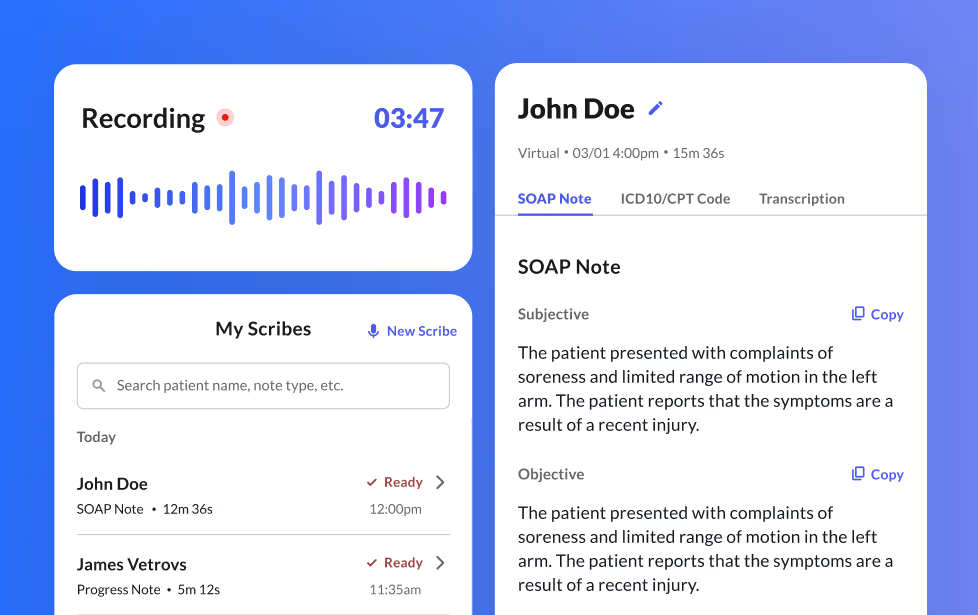
Medical scribe app interface showing a recording waveform, a list of patient notes, and a SOAP note for John Doe.

Stop looking up codes.

Scribe auto-generates them for you.

Try Commure Scribe →

At a glance

Code Family

R19: Other symptoms and signs involving the digestive system and abdomen.

HCC Mapping (v28)

None. R19.7 does not map to a payment HCC in the CMS-HCC v28 crosswalk.

Condition

Diarrhea

Billable

Yes, R19.7 is a valid billable code.

Effective Date

Valid in the FY2026 code set and unchanged in the FY2027 update.

Family Specificity

Nine subdivisions of R19 covering distinct digestive system signs, with R19.7 reserved for diarrhea documented without an established cause.

Which R19 code do I assign?

The R19 family splits by which digestive system sign the note documents, not by severity or by cause. Within that family R19.7 covers diarrhea that has no established underlying diagnosis at the encounter.

When documentation says…
Code
Loose stools for three days, cause not yet established
R19.7
Diarrhea recorded as a presenting symptom with no definitive underlying diagnosis. The note must show that the workup is pending or that no cause has been identified at this encounter.
Functional diarrhea
K59.1
Functional diarrhea as a named functional bowel disorder. The R19.7 Excludes1 note bars reporting K59.1 and R19.7 together for the same condition.
Psychogenic diarrhea
F45.8
Other somatoform disorders. The Index sends Diarrhea, psychogenic to F45.8. The R19.7 Excludes1 note bars reporting F45.8 and R19.7 together for the same condition.
Noninfective diarrhea in a newborn
P78.3
Noninfective neonatal diarrhea. The R19.7 Excludes1 note bars reporting P78.3 and R19.7 together for the same condition.
Diarrhea predominant irritable bowel syndrome
K58.0
Irritable bowel syndrome with diarrhea. The note must establish irritable bowel syndrome as the diagnosis rather than diarrhea as an isolated symptom.
Infectious gastroenteritis, organism not identified
A09
Infectious gastroenteritis and colitis, unspecified. The note must document an infectious etiology. Once a cause is confirmed, R19.7 is no longer assigned.
Clostridium difficile confirmed on stool testing
A04.7-
Enterocolitis due to Clostridium difficile, subdivided into A04.71 for recurrent disease and A04.72 where recurrence is not specified. The note must state the confirmed organism.

Tabular notes

EXCLUDES1

R19.7 carries an Excludes1 note for functional diarrhea (K59.1), neonatal diarrhea (P78.3) and psychogenic diarrhea (F45.8). K59.1: Functional diarrhea. Diarrhea documented as functional is coded K59.1 rather than R19.7. P78.3: Noninfective neonatal diarrhea. Neonatal cases are coded P78.3 rather than R19.7. F45.8: Other somatoform disorders. Diarrhea documented as psychogenic in etiology is coded F45.8 rather than R19.7. None of these three codes is reported with R19.7 for the same condition. Category R19 also carries an Excludes1 note for acute abdomen (R10.0).

EXCLUDES2

R19.7 and category R19 carry no Excludes2 note of their own. Block R10-R19 carries an Excludes2 note for congenital or infantile pylorospasm (Q40.0), gastrointestinal hemorrhage (K92.0-K92.2), intestinal obstruction (K56.-), newborn gastrointestinal hemorrhage (P54.0-P54.3), newborn intestinal obstruction (P76.-), pylorospasm (K31.3), signs and symptoms involving the urinary system (R30-R39), symptoms referable to female genital organs (the N94 codes) and symptoms referable to male genital organs (N48-N50). Chapter 18 carries an Excludes2 note for abnormal findings on antenatal screening of mother (O28.-), certain conditions originating in the perinatal period (P04-P96), signs and symptoms classified in the body system chapters and signs and symptoms of breast (N63, N64.5). An Excludes2 note permits dual coding when both conditions are present.

FY2027: EFFECTIVE 1 OCTOBER 2026

The FY2027 codes addenda make no addition, deletion or revision in category R19. The FY2027 tabular addenda change no instructional note in it. R19.7 is in the FY2027 billable code list and is unchanged in the FY2027 update.

Operational & financial impact

Why specificity matters beyond the chart: risk adjustment, DRG assignment and denial exposure all follow from which code is selected.

CMS-HCC v28 (PY2024+)

Code R19.7 does not map to any HCC under CMS-HCC v28.

Unspecified diarrhea is not a risk adjustment bearing condition in the v28 model.

MEDICARE AND COMMERCIAL PAYERS

No National Coverage Determination governs diarrhea diagnosis coding.

WHERE SPECIFICITY IS LOST

Once a definitive cause is confirmed, the definitive diagnosis code replaces R19.7. Continuing to report the symptom code after confirmation leaves the established diagnosis uncaptured on the claim.

A symptom code cannot carry the clinical detail that an infectious, inflammatory or functional diagnosis carries. The loss is in what the record shows about the patient, not only in what the claim pays.

INPATIENT VERSUS OUTPATIENT USE

Code R19.7 fits an outpatient encounter for acute diarrhea where the workup is still pending.

On an inpatient record, R19.7 is not used as principal diagnosis once a related definitive diagnosis has been established (Section II.A). Where the cause remains unknown at discharge, R19.7 may be retained.

Documentation checklist to support R19.7

Chart elements that support code selection and reduce specificity-driven denials.

FAQ

Is R19.7 a billable code?

Yes. Code R19.7 is a billable ICD-10-CM code. It is valid in the FY2026 code set and unchanged in the FY2027 update.

When should I use R19.7 instead of K59.1?

Use K59.1 when the provider documents functional diarrhea. Use R19.7 when diarrhea is the presenting symptom and no definitive cause has been established. The R19.7 Excludes1 note bars reporting the two codes together for the same condition.

Does R19.7 map to an HCC?

No. Code R19.7 does not map to any HCC under CMS-HCC v28. Unspecified diarrhea is not a risk adjustment bearing condition.

What does the note need to show to support R19.7?

The provider must document diarrhea as the primary complaint or diagnosis. The record must also show that no definitive diagnosis has been established, such as infectious gastroenteritis, irritable bowel syndrome or Crohn's disease.

What happens when the cause is confirmed later?

Update the code to the definitive diagnosis. Code R19.7 is not continued once a cause is confirmed, even where it was the correct selection at the first visit.

How does R19.7 differ between inpatient and outpatient coding?

Code R19.7 fits an outpatient encounter for acute diarrhea where the workup is still pending. On an inpatient record, it is not used as principal diagnosis once a related definitive diagnosis has been established (Section II.A). Where the cause remains unknown at discharge, R19.7 may be retained.

Can I use R19.7 for traveler's diarrhea?

R19.7 fits traveler's diarrhea only where no specific cause has been confirmed. Where traveler's diarrhea is established as a specific infectious diagnosis, assign the appropriate infectious disease code, such as A09 for infectious gastroenteritis and colitis, unspecified.

Which R19.7 coding errors should I avoid?

Avoid assigning R19.7 after the provider has documented a definitive cause such as an infection, irritable bowel syndrome or Crohn's disease. Avoid pairing R19.7 with K59.1 for the same condition, which the Excludes1 note prohibits. Avoid assigning R19.7 for neonatal diarrhea in place of P78.3.

Related codes

Codes in the same family as R19.7. Only codes with a published page render as links.

Sibling codes in the R19 family

  • R19.0-: Intra-abdominal and pelvic swelling, mass and lump, subdivided by site.
  • R19.1-: Abnormal bowel sounds, subdivided by finding.
  • R19.2: Visible peristalsis.
  • R19.3-: Abdominal rigidity, subdivided by site.
  • R19.4: Change in bowel habit.
  • R19.5: Other fecal abnormalities.
  • R19.6: Halitosis.
  • R19.8: Other specified symptoms and signs involving the digestive system and abdomen.

Additional codes to consider

Codes outside the R19 family considered alongside R19.7.

Consider instead

  • K59.1: Functional diarrhea, not reported with R19.7 for the same condition under an Excludes1 note.
  • P78.3: Noninfective neonatal diarrhea, not reported with R19.7 for the same condition under an Excludes1 note.
  • F45.8: Other somatoform disorders, the category that indexes psychogenic diarrhea, not reported with R19.7 for the same condition under an Excludes1 note.
  • K58.0: Irritable bowel syndrome with diarrhea.
  • A09: Infectious gastroenteritis and colitis, unspecified.
  • A04.7-: Enterocolitis due to Clostridium difficile, subdivided into A04.71 and A04.72.
  • K50.90: Crohn's disease, unspecified, without complications.
  • K57.30: Diverticulosis of large intestine without perforation or abscess without bleeding.

Sources

All claims on this page derive from government and professional-standards sources.

Stop looking up codes. Scribe generates them for you.

Commure Scribe listens to your visit and auto-generates billing codes, no manual lookup.