
R62.7

R62.7: Adult failure to thrive

The ICD-10-CM code for failure to thrive in an adult, assigned when the record documents weight loss and functional decline and the provider has not established a more specific cause.

Billable
FY2027

TABLE OF CONTENTS

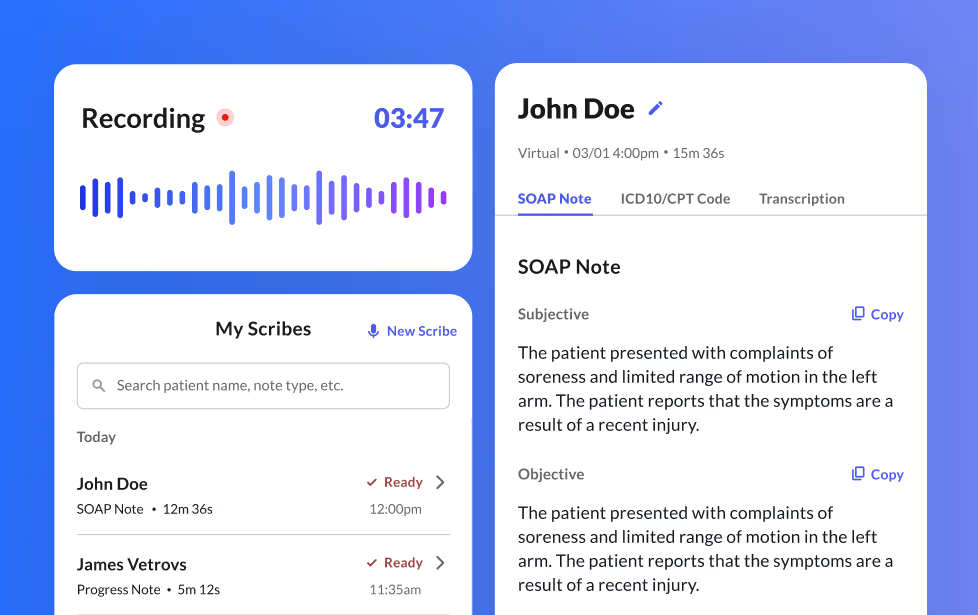
Medical scribe app interface showing a recording waveform, a list of patient notes, and a SOAP note for John Doe.

Stop looking up codes.

Scribe auto-generates them for you.

Try Commure Scribe →

At a glance

Code Family

R62: Lack of expected normal physiological development in childhood and adults.

DRG Grouping

MS-DRG 640 with MCC or 641 without MCC, Miscellaneous Disorders of Nutrition, Metabolism, Fluids and Electrolytes, in MDC 10 under the FY2027 MS-DRG v44 grouper.

HCC Mapping (v28)

No mapping. R62.7 does not appear on the CMS-HCC v28 ICD-10 to HCC crosswalk.

Condition

Adult failure to thrive.

Family Specificity

Six billable codes split first on age. R62.0, R62.50, R62.51, R62.52 and R62.59 are restricted to childhood. R62.7 is the only adult code in the category.

Effective Date

Valid in the FY2026 code set and unchanged in the FY2027 update.

Which R62 code do I assign?

Category R62 splits first on the patient's age, then on the kind of developmental shortfall the note documents. R62.7 is the only code in the category written for an adult.

When documentation says…
Code
Failure to thrive in an adult
R62.7
Failure to thrive in a patient who is no longer a child. R62.7 is the only R62 code available for an adult. The note must establish weight loss or functional decline that the provider has not attributed to a more specific diagnosis.
Failure to thrive in a child
R62.51
Failure to thrive before adulthood, coded in the R62.5 subcategory rather than at R62.7. Its inclusion terms are failure to gain weight and faltering growth. A child under 28 days old is excluded to P92.6.
Newborn under 28 days old is not gaining weight
P92.6
Failure to thrive in newborn. R62.51 carries an Excludes1 note for failure to thrive in a child under 28 days old, which sends the encounter here.
Late walker or late talker
R62.0
Delayed milestone in childhood, for a child who has not reached an expected physiological developmental stage. Its inclusion terms are delayed attainment of expected physiological developmental stage, late talker and late walker.
Short stature in a child
R62.52
Short stature (child), whose inclusion terms are lack of growth, physical retardation and short stature NOS. Short stature caused by an endocrine disorder is excluded to the E34.3- codes.
Child is not developing normally, no further detail
R62.50
Unspecified lack of expected normal physiological development in childhood, the residual code when the note gives no further characterization. Infantilism NOS indexes here. A named shortfall that fits none of the other codes goes to R62.59 instead.
Severe protein-calorie malnutrition
E43
Unspecified severe protein-calorie malnutrition, a graded nutritional diagnosis rather than a symptom code. Where the provider documents malnutrition and states its severity, E43 or an E44 code carries clinical substance that R62.7 does not.

Tabular notes

EXCLUDES1

Category R62 carries three Excludes1 notes, and they govern every code beneath it including R62.7: delayed puberty (E30.0), gonadal dysgenesis (Q99.1) and hypopituitarism (E23.0). An Excludes1 note means the two codes are not reported together for the same condition. R62.7 carries no Excludes1 note of its own. The Excludes1 notes at R62.5 and R62.51 apply only to the childhood codes.

EXCLUDES2

Chapter 18 carries an Excludes2 note at chapter level. It covers signs and symptoms classified in the body system chapters, certain conditions originating in the perinatal period (P04-P96), abnormal findings on antenatal screening of mother (O28.-) and signs and symptoms of breast (N63, N64.5). Neither category R62 nor R62.7 adds an Excludes2 note of its own. Two Excludes2 notes elsewhere in the tabular point back at R62.7. The note at E63, other nutritional deficiencies, reads failure to thrive, adult (R62.7). The note at E88.A, wasting disease (syndrome) due to underlying condition, reads failure to thrive (R62.51, R62.7). Excludes2 means the patient may have both conditions. Both codes may be reported when both are documented.

FY2027: EFFECTIVE 1 OCTOBER 2026

The FY2027 codes addenda make no addition, deletion or revision in category R62. The FY2027 tabular addenda change no instructional note in it. The three Excludes1 notes at R62 are unchanged. R62.7 is in the FY2027 billable code list and is unchanged in the FY2027 update.

Operational & financial impact

Why specificity matters beyond the chart: risk adjustment, DRG assignment and denial exposure all follow from which code is selected.

CMS-HCC v28 (PY2024+)

R62.7 does not appear on the CMS-HCC v28 ICD-10 to HCC crosswalk. It contributes nothing to a Medicare Advantage risk score.

The malnutrition codes lost HCC status between v24 and v28. The CMS v24 crosswalk maps E40, E41, E42, E43, E44.0, E44.1, E45, E46 and R64 to HCC 21, Protein-Calorie Malnutrition. The v28 115-HCC model carries no malnutrition HCC at all, and none of those codes appears on its crosswalk.

R62.51 and the other childhood R62 codes carry no v28 HCC either. No code in category R62 does.

MS-DRG v44 (FY2027)

R62.7 is an acceptable principal diagnosis under the FY2027 MS-DRG v44 grouper. It groups to MDC 10, Endocrine, Nutritional and Metabolic Diseases and Disorders.

Two DRGs form the pair. MS-DRG 640 is Miscellaneous Disorders of Nutrition, Metabolism, Fluids and Electrolytes with MCC. MS-DRG 641 is Miscellaneous Disorders of Nutrition, Metabolism, Fluids and Electrolytes without MCC.

E43 and the other malnutrition codes group to the same DRG pair when one of them is the principal diagnosis.

Medicare and commercial payers

Palmetto GBA publishes a Local Coverage Determination for hospice under the adult failure to thrive syndrome, L34558, revised effective 4 January 2024.

That LCD sets three coverage expectations. The first is a body mass index below 22 kg/m2. The second is a Karnofsky or Palliative Performance Scale value of 40 percent or less. The third is either refusal of enteral or parenteral nutritional support or a failure to respond to it despite adequate caloric intake.

CMS stated in the FY2014 Hospice Wage Index final rule that debility and adult failure to thrive may not be reported as principal hospice diagnoses. Claims reporting them as the principal diagnosis are returned to the provider. The codes may still be reported as other, additional or coexisting diagnoses.

WHERE SPECIFICITY IS LOST

R62.7 is a chapter 18 symptom code. Section I.B.4 of the FY2027 ICD-10-CM Official Guidelines allows a symptom code only when a related definitive diagnosis has not been established by the provider.

A documented and graded malnutrition is the more specific diagnosis. Severe protein-calorie malnutrition is E43, moderate is E44.0 and mild is E44.1. Malnutrition documented without a grade is E46.

Where the note supports both a graded malnutrition and adult failure to thrive, both may be reported. The E code carries the nutritional diagnosis and R62.7 carries the functional decline.

R62.7 conveys no weight, no intake level and no functional score. A reviewer working from the code alone has to read the note for all three.

Documentation checklist to support R62.7

Chart elements that support code selection and reduce specificity-driven denials.

FAQ

Is R62.7 a billable ICD-10 code?

Yes. R62.7 is valid for submission at the fourth character and no further characters exist beneath it. It is valid in the FY2026 code set and unchanged in the FY2027 update.

What is the ICD-10 code for failure to thrive in a child?

Pediatric failure to thrive is R62.51, failure to thrive (child). It sits in the R62.5 subcategory rather than at R62.7. A child under 28 days old is excluded from R62.51 to P92.6, failure to thrive in newborn.

Does R62.7 map to an HCC under CMS-HCC v28?

No. R62.7 does not appear on the CMS-HCC v28 ICD-10 to HCC crosswalk and contributes nothing to a Medicare Advantage risk score. The malnutrition codes E40-E46 and cachexia R64 mapped to HCC 21, Protein-Calorie Malnutrition, under v24. The v28 115-HCC model carries no malnutrition HCC.

When should I code E43 instead of R62.7?

Code E43 when the provider documents severe protein-calorie malnutrition without naming kwashiorkor or marasmus. E43 states a nutritional diagnosis and a severity grade, which R62.7 does not. The two are not mutually exclusive. Both may be reported when the note supports a graded malnutrition alongside adult failure to thrive.

Can R62.7 be the principal diagnosis?

Yes. On the inpatient side, R62.7 can be the principal diagnosis where no related definitive diagnosis has been established at discharge. Section II.A of the FY2027 Official Guidelines permits a symptom code as principal in that case. R62.7 is an acceptable principal diagnosis in MS-DRG 640 and 641 under the FY2027 MS-DRG v44 grouper. CMS bars it as the principal hospice diagnosis under the FY2014 Hospice Wage Index final rule.

What must the note document to support R62.7?

The note must document a weight trend with dated values, a functional decline, and evidence that a treatable cause was looked for and not found. R62.7 conveys no weight, no intake level and no functional score of its own. Those values have to sit in the note for the code to survive review.

Does R62.7 work differently inpatient and outpatient?

The code and the documentation bar are the same in both settings. The difference is in uncertain diagnoses. An inpatient discharge diagnosis documented as probable or suspected may be coded as if it existed under Section II.H. An outpatient encounter codes only what is confirmed at that visit.

Did anything change for R62.7 in FY2027?

No. R62.7 is unchanged in the FY2027 update, effective 1 October 2026. The FY2027 addenda make no change in category R62. The three Excludes1 notes at R62 for delayed puberty (E30.0), gonadal dysgenesis (Q99.1) and hypopituitarism (E23.0) are unchanged.

Related codes

Codes in the same family as R62.7. Only codes with a published page render as links.

Sibling codes in the R62 family

  • R62.0: Delayed milestone in childhood.
  • R62.50: Unspecified lack of expected normal physiological development in childhood.
  • R62.51: Failure to thrive (child).
  • R62.52: Short stature (child).
  • R62.59: Other lack of expected normal physiological development in childhood.

Additional codes to consider

Codes outside the R62 family considered alongside R62.7.

Consider instead

  • R62.51: Failure to thrive (child), the code for failure to thrive before adulthood.
  • P92.6: Failure to thrive in newborn, for a child under 28 days old, which R62.51 excludes with an Excludes1 note.
  • R54: Age-related physical debility, whose inclusion terms are frailty, old age, senescence, senile asthenia and senile debility.
  • M62.84: Sarcopenia, which R54 excludes with an Excludes1 note.
  • E88.A: Wasting disease (syndrome) due to underlying condition, which carries a Code first instruction for the underlying condition.
  • E45: Retarded development following protein-calorie malnutrition, covering nutritional short stature and nutritional stunting. Subcategory R62.5 carries an Excludes1 note for it.
  • B20: Human immunodeficiency virus [HIV] disease, which subcategory R62.5 excludes from the childhood failure to thrive codes.

Sources

All claims on this page derive from government and professional-standards sources.

Stop looking up codes. Scribe generates them for you.

Commure Scribe listens to your visit and auto-generates billing codes, no manual lookup.