
R30.0

R30.0: Dysuria

The ICD-10-CM code for dysuria, meaning painful or burning urination, used when the underlying cause has not been established at the encounter.

Billable
FY2027

TABLE OF CONTENTS

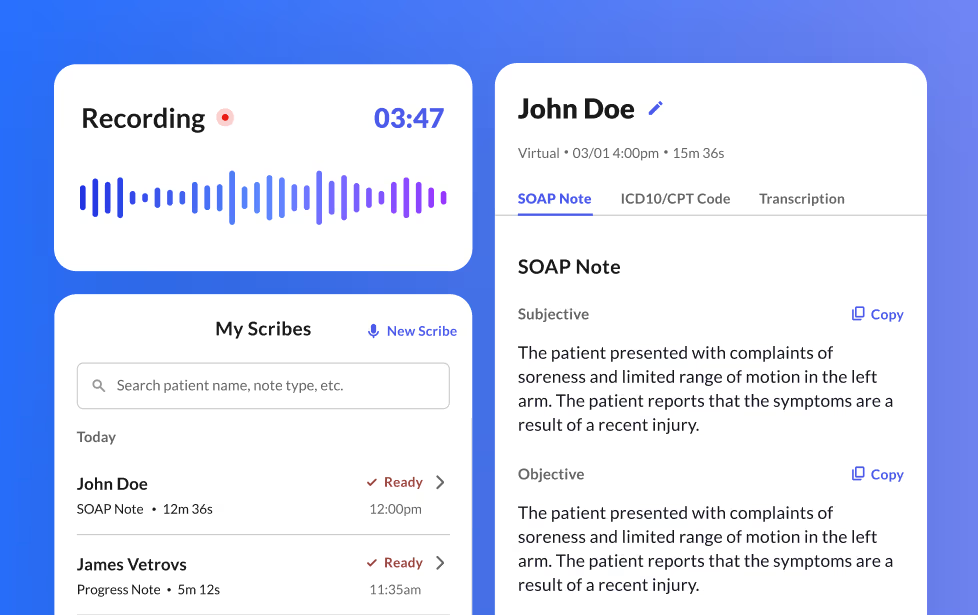
Medical scribe app interface showing a recording waveform, a list of patient notes, and a SOAP note for John Doe.

Stop looking up codes.

Scribe auto-generates them for you.

Try Commure Scribe →

At a glance

Code Family

R30: Pain associated with micturition, within block R30–R39, symptoms and signs involving the genitourinary system.

Condition

Dysuria

HCC Mapping (v28)

None: R30.0 does not map to any HCC in CMS-HCC v28 or v24.

DRG Grouping

MS-DRG 695 with MCC or 696 without MCC, Kidney and Urinary Tract Signs and Symptoms, in MDC 11 under the FY2027 MS-DRG v44 grouper.

Billable

Yes: valid for HIPAA-covered transactions.

Family Specificity

Three billable child codes splitting on the character of the micturition symptom, with R30.0 for pain or burning on urination and R30.9 as the residual code when the term is not further specified.

Which R30 code do I assign?

Category R30 splits on the character of the micturition symptom rather than on its cause. R30.0 covers documented dysuria while the underlying etiology remains unestablished or is coded elsewhere as the principal diagnosis.

When documentation says…
Code
Dysuria, cause not yet established
R30.0
Use when the provider documents dysuria or strangury as the presenting complaint. Strangury is the inclusion term at R30.0. The Index sends Micturition, painful, dysuria to R30.0 and painful micturition with no further detail to R30.9. The note must show that the underlying etiology has not been established at this encounter.
Straining after voiding or a sensation of incomplete emptying
R30.1
Vesical tenesmus, the straining sensation after voiding rather than pain during it. The complaint recorded must be the feeling of incomplete bladder emptying.
Pain with urination, term not further specified
R30.9
Painful micturition, unspecified, used when the record documents pain on urination but does not identify it as dysuria or as vesical tenesmus.
Urinary tract infection confirmed by the provider
N39.0
The confirmed infection carries the encounter as the principal diagnosis. Dysuria is integral to that diagnosis and is not separately reported.
Urinary pain documented as psychogenic in origin
F45.8
Other somatoform disorders. The Index sends Dysuria, psychogenic to F45.8. Category R30 carries an Excludes1 note for psychogenic pain associated with micturition (F45.8). The two are not reported together for the same complaint.
Kidney stone documented as the cause
N20.0
Calculus of kidney, assigned when urolithiasis is the documented etiology of the urinary pain.
Interstitial cystitis documented as the cause
N30.1-
Interstitial cystitis (chronic), assigned when the provider documents it as the underlying cause. A fifth character is required to record whether hematuria is present.

Tabular notes

EXCLUDES1

Category R30 carries an Excludes1 note for psychogenic pain associated with micturition, which is classified to F45.8. The note sits at the category level and governs R30.0. Excludes1 means the two are not reported together for the same complaint. When the provider documents a psychogenic etiology for the urinary pain, F45.8 is assigned in place of R30.0. R30.0 and category R30 carry no Excludes2, Use Additional or Code First instruction in FY2027. Chapter 18 carries an Excludes2 note for abnormal findings on antenatal screening of mother (O28.-), certain conditions originating in the perinatal period (P04-P96), signs and symptoms classified in the body system chapters and signs and symptoms of breast (N63, N64.5).

SYMPTOM CODE SEQUENCING

Section I.B.5 of the Official Guidelines states that signs and symptoms associated routinely with a disease process are not assigned as additional codes. When the provider confirms a urinary tract infection, N39.0 carries the encounter as the principal diagnosis. R30.0 is not additionally reported for the dysuria that the infection explains. R30.0 holds the principal position only while the cause is under evaluation. It may be reported again at a later encounter if the dysuria persists after the underlying condition has resolved and becomes the reason for that visit.

FY2027: NO CHANGES

The FY2027 codes addenda make no addition, deletion or revision in category R30. The FY2027 tabular addenda change no instructional note in it. R30.0 is in the FY2027 billable code list and is unchanged in the FY2027 update, effective 1 October 2026.

Operational & financial impact

Why specificity matters beyond the chart: risk adjustment, DRG assignment and denial exposure all follow from which code is selected.

CMS-HCC v28 (PY2024+)

No HCC mapping applies. R30.0 does not map to any HCC category in CMS-HCC v28.

Documenting dysuria alone does not contribute to a Medicare Advantage risk score.

V24 TO V28 TRANSITION

R30.0 carried no HCC weight under CMS-HCC v24. It carries none under v28. The transition to v28 does not change the risk adjustment status of this code.

WHERE SPECIFICITY IS LOST

Any risk adjusted value in a dysuria encounter sits in the underlying diagnosis rather than in the symptom code. When the etiology is established and documented, coding only R30.0 leaves that condition uncaptured. Urinary tract infection, urolithiasis and interstitial cystitis each carry their own codes. The record should carry the one the provider has confirmed.

MS-DRG ASSIGNMENT: FY2027 (V44)

R30.0 as a principal inpatient diagnosis groups to MS-DRG 695 or 696 in MDC 11 under the FY2027 MS-DRG v44 grouper. MS-DRG 695 is Kidney and Urinary Tract Signs and Symptoms with MCC. MS-DRG 696 is Kidney and Urinary Tract Signs and Symptoms without MCC. An MCC reported as a secondary diagnosis moves the case from MS-DRG 696 to MS-DRG 695.

MEDICARE

R30.0 is a valid diagnosis code for Medicare claims. It supports urinalysis, urine culture and urologic consultation services when dysuria is the presenting symptom.

Documentation checklist to support R30.0

Chart elements that support code selection and reduce specificity-driven denials.

FAQ

Is R30.0 a billable code?

Yes. R30.0 is a valid billable code for HIPAA-covered transactions. It sits at the full level of specificity available in category R30. No further characters are required.

Should R30.0 be coded alongside N39.0 for a urinary tract infection?

R30.0 is not coded alongside N39.0 when the dysuria is part of the UTI. Section I.B.5 of the Official Guidelines states that signs and symptoms associated routinely with a disease process are not assigned as additional codes. When N39.0 is the principal diagnosis, R30.0 is not separately coded. If the dysuria persists after the UTI has resolved and becomes the focus of a separate encounter, R30.0 may be appropriate for that visit.

Does R30.0 map to an HCC?

No. R30.0 does not map to any HCC category under CMS-HCC v28. It did not map under v24 either. Documenting dysuria alone does not affect a Medicare Advantage risk score.

What is the difference between R30.0, R30.1 and R30.9?

R30.0 is dysuria, meaning pain, burning or difficulty on urination. Its inclusion term is strangury. R30.1 is vesical tenesmus, the feeling of incomplete bladder emptying or straining after voiding. R30.9 is painful micturition, unspecified, used when pain on urination is documented but is not identified as dysuria or as vesical tenesmus.

What must the note contain to support R30.0?

The provider must document dysuria or strangury as a clinical complaint or finding. Painful urination with no further detail indexes to R30.9. When the underlying cause has been identified, the note should state that specific etiology. The etiology code then serves as the principal diagnosis.

Can R30.0 and F45.8 be reported together?

R30.0 and F45.8 are not reported together for the same complaint. Category R30 carries an Excludes1 note for psychogenic pain associated with micturition, which is classified to F45.8. Excludes1 means the two are mutually exclusive for the same complaint. When a psychogenic etiology is documented, F45.8 is assigned instead of R30.0.

Does R30.0 behave differently on an inpatient claim?

In outpatient and urgent care settings R30.0 is used when dysuria is the presenting complaint and the cause is still under evaluation. Dysuria alone rarely drives an inpatient admission. On an inpatient record R30.0 is more likely to appear as a secondary symptom code. The underlying cause serves as the principal diagnosis.

Did anything change for R30.0 in FY2027?

No. R30.0 is unchanged in the FY2027 update, effective 1 October 2026. The FY2027 codes addenda make no addition, deletion or revision in category R30. The FY2027 tabular addenda change no instructional note in it.

Related codes

Codes in the same family as R30.0. Only codes with a published page render as links.

Sibling codes in the R30 family

  • R30.1: Vesical tenesmus, the sensation of incomplete bladder emptying or straining after voiding.
  • R30.9: Painful micturition, unspecified, when pain on urination is documented without the term dysuria.

Additional codes to consider

Codes outside the R30 family considered alongside R30.0.

Consider instead

  • N39.0: Urinary tract infection, site not specified, coded in place of R30.0 once a UTI is confirmed as the cause.
  • N20.0: Calculus of kidney, when a kidney stone is the documented cause.
  • N30.10: Interstitial cystitis (chronic) without hematuria, when documented as the underlying cause.
  • N30.11: Interstitial cystitis (chronic) with hematuria, when documented as the underlying cause.
  • F45.8: Other somatoform disorders, for psychogenic pain associated with micturition, named in the category R30 Excludes1 note.
  • R30.1: Vesical tenesmus, when the complaint is straining or incomplete emptying rather than pain.
  • R30.9: Painful micturition, unspecified, when pain on urination is documented without the term dysuria.
  • N34.-: Urethritis and urethral syndrome, when urethritis is the documented cause.
  • N21.-: Calculus of lower urinary tract, when a bladder or urethral stone is the documented cause.

Sources

All claims on this page derive from government and professional-standards sources.

Stop looking up codes. Scribe generates them for you.

Commure Scribe listens to your visit and auto-generates billing codes, no manual lookup.