
R00.1

R00.1: Bradycardia, unspecified

The ICD-10-CM code for bradycardia recorded as a symptom, used when the note documents a slow heart rate without naming the conduction mechanism behind it.

Billable
FY2027

TABLE OF CONTENTS

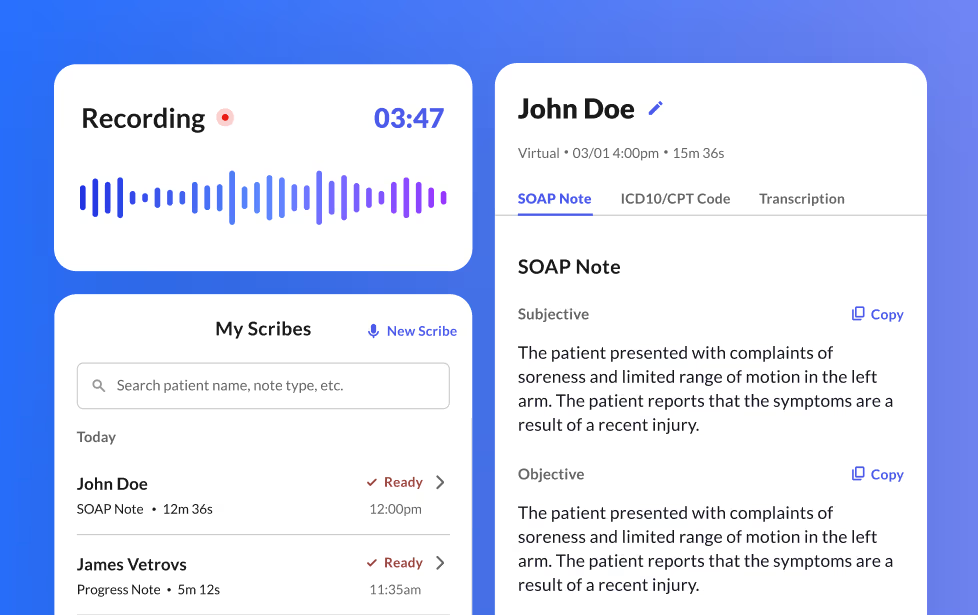
Medical scribe app interface showing a recording waveform, a list of patient notes, and a SOAP note for John Doe.

Stop looking up codes.

Scribe auto-generates them for you.

Try Commure Scribe →

At a glance

Code Family

R00: Abnormalities of heart beat.

Condition

Bradycardia

Billable

Yes. R00.1 is a valid code and requires no further characters.

DRG Grouping

MS-DRG 308, 309 or 310, cardiac arrhythmia and conduction disorders, in MDC 05 under the FY2027 MS-DRG v44 grouper.

HCC Mapping (v28)

None. R00.1 carries no CMS-HCC v28 condition category. I49.5 and I44.2 each map to HCC 238, Specified Heart Arrhythmias.

Family Specificity

Five subcategory codes covering tachycardia, bradycardia, palpitations and other or unspecified abnormalities of heart beat. R00.1 has no child codes.

Which R00 code do I assign?

Category R00 splits on which abnormality of the heart beat the note records, not on cause, severity or the presence of symptoms. R00.1 is the bradycardia slot only while the mechanism is unnamed, because a documented sinus node, atrioventricular or sinoatrial mechanism is classified in chapter 9 instead.

When documentation says…
Code
Sinus bradycardia, heart rate 52, asymptomatic
R00.1
Bradycardia with no mechanism named. Sinoatrial bradycardia, sinus bradycardia, vagal bradycardia and slow heart beat are the four inclusion terms at R00.1. Any of those phrasings lands here without further specificity.
Bradycardia attributed to metoprolol, correctly prescribed and taken as directed
R00.1
Bradycardia as the adverse effect of a drug. R00.1 is sequenced first as the nature of the adverse effect. The Use additional code instruction at R00.1 then calls for the drug code, T44.7X5- for a beta blocker or T46.1X5- for a calcium channel blocker.
Sick sinus syndrome
I49.5
Sinus node dysfunction named as a diagnosis. Sinus node dysfunction and tachy-brady syndrome resolve the same way, because tachycardia-bradycardia syndrome is an inclusion term at I49.5. I49.5 maps to HCC 238 under CMS-HCC v28. R00.1 carries no such mapping.
First degree AV block
I44.0
Atrioventricular block, first degree. The mechanism is named, which takes the encounter out of R00 altogether. I44.0 carries no CMS-HCC v28 mapping.
Second degree AV block, Mobitz type I
I44.1
Atrioventricular block, second degree. Mobitz block type I and type II, second degree block type I and II, and Wenckebach's block are all inclusion terms at I44.1. The type is not needed to reach the code.
Complete heart block
I44.2
Atrioventricular block, complete. Complete heart block NOS and third degree block are the inclusion terms here. I44.2 maps to HCC 238 under CMS-HCC v28.
Sinoatrial block
I45.5
Other specified heart block. Sinoatrial block and sinoauricular block are the inclusion terms at I45.5. An Excludes1 at I45.5 sends heart block NOS to I45.9 instead.

Tabular notes

EXCLUDES1

Neonatal bradycardia (P29.12). This note sits on R00.1 itself. Excludes1 means R00.1 and P29.12 are never reported together for the same condition. Category R00 carries a second Excludes1 covering the same ground more broadly: abnormalities originating in the perinatal period (the P29.1 codes). A bradycardia originating in the perinatal period is classified in chapter 16 rather than at R00.1.

EXCLUDES2

Specified arrhythmias (I47-I49). This note sits at category R00. Excludes2 means the patient may have both conditions. R00.1 and a specified arrhythmia code may therefore be reported together when both are documented and neither is integral to the other. Category I49 carries the reciprocal Excludes2 pointing back: bradycardia NOS (R00.1), sinoatrial bradycardia (R00.1), sinus bradycardia (R00.1) and vagal bradycardia (R00.1). Those four entries confirm that the sinus and vagal phrasings belong at R00.1 rather than anywhere in I49.

USE ADDITIONAL

Code for adverse effect, if applicable, to identify drug (T36-T50 with fifth or sixth character 5). Where the bradycardia is an adverse effect of a drug correctly prescribed and taken as directed, R00.1 is sequenced first as the nature of the adverse effect. The drug code follows: T44.7X5- for beta-adrenoreceptor antagonists, T46.1X5- for calcium-channel blockers, T46.0X5- for cardiac-stimulant glycosides such as digoxin. Each of those T codes needs a seventh character, A for the initial encounter, D for a subsequent encounter or S for sequela.

FY2027: EFFECTIVE 1 OCTOBER 2026

Four inclusion terms sit at R00.1 in the FY2027 tabular: Sinoatrial bradycardia, Sinus bradycardia, Slow heart beat and Vagal bradycardia. Category R00 holds five codes in this release: R00.0, R00.1, R00.2, R00.8 and R00.9. R00.1 was valid in the FY2026 code set and is unchanged in the FY2027 update. The FY2027 codes and tabular addenda make no change in category R00. The same update replaces I49.8 with three codes: I49.81 for Brugada syndrome, I49.82 for ventricular bigeminy and I49.89 for other specified cardiac arrhythmias not elsewhere classified. It also adds a Use additional code note at T65.85-, toxic effect of medetomidine, that names bradycardia NOS (R00.1) as an associated manifestation.

Operational & financial impact

Why specificity matters beyond the chart: risk adjustment, DRG assignment and denial exposure all follow from which code is selected.

CMS-HCC v28 (PY2024+)

R00.1 does not map to a condition category in version 28 of the CMS-HCC model. No code in category R00 does: R00.0, R00.1, R00.2, R00.8 and R00.9 all return no mapping.

I49.5, sick sinus syndrome, maps to HCC 238, Specified Heart Arrhythmias.

I44.2, complete atrioventricular block, maps to HCC 238, Specified Heart Arrhythmias.

I44.0, I44.1, I44.30, I44.39, I44.7, I45.5, I45.9 and I49.9 carry no v28 mapping. I49.81, I49.82 and I49.89, which replace I49.8 in FY2027, postdate the crosswalk. Naming a mechanism does not by itself produce a condition category. Within this group only sick sinus syndrome and complete atrioventricular block map.

HCC 238 appears in no hierarchy in the v28 payment model. It neither supersedes nor is superseded by another arrhythmia condition category.

Source: the CMS-HCC v28 model software files, diagnosis crosswalk F2823T2N and label file V28115L3.

MS-DRG v44 (FY2027)

MS-DRG 308: Cardiac arrhythmia and conduction disorders with MCC.

MS-DRG 309: Cardiac arrhythmia and conduction disorders with CC.

MS-DRG 310: Cardiac arrhythmia and conduction disorders without CC/MCC.

R00.1 sits on the principal diagnosis list for this triad, in MDC 05, diseases and disorders of the circulatory system. So do I49.5, I44.0, I44.2, I45.5 and I45.9. Selecting the mechanism code over R00.1 does not move the case out of the triad. The consequence of leaving bradycardia unspecified falls on risk adjustment rather than on the DRG.

Where a permanent pacemaker is implanted during the stay, the case leaves the medical triad for the surgical pacemaker triad in MDC 05. Those groups are MS-DRG 242, permanent cardiac pacemaker implant with MCC, MS-DRG 243 with CC, and MS-DRG 244 without CC/MCC.

Source: the MS-DRG Definitions Manual Version 44.0 for FY2027, MDC 05 principal diagnosis lists.

Medicare and commercial payers

R00.1 is a valid billable code with no further characters required.

No National Coverage Determination addresses bradycardia diagnosis coding specifically.

Where no mechanism has been established, R00.1 is the code that reflects the level of certainty reached at that encounter, under Section I.B.18 of the FY2027 ICD-10-CM Official Guidelines.

Chapter 18 of the tabular states that signs and symptoms pointing rather definitely to a given diagnosis have been assigned to categories in other chapters. That instruction is what moves a documented mechanism out of R00.

WHERE SPECIFICITY IS LOST

R00.1 assigned when the note already documents sick sinus syndrome. I49.5 applies instead and carries HCC 238.

R00.1 assigned when the note documents complete heart block. I44.2 applies instead and carries HCC 238.

R00.1 assigned alone when the bradycardia is attributed to a correctly prescribed rate lowering drug. The Use additional code instruction at R00.1 calls for the adverse effect code as well.

R00.1 carried forward on a problem list after a pacemaker has been implanted. Z95.0 records the device. The conduction diagnosis that justified the device still needs its own code.

R00.1 assigned on a newborn record. The Excludes1 at R00.1 sends neonatal bradycardia to P29.12.

R00.1 assigned for a home monitor alarm that produced no findings. Z03.83 carries an inclusion term for an encounter for observation for bradycardia alarm without findings.

R00.1 assigned alone when the provider documents the bradycardia as a complication of a procedure. I97.19- applies for the postprocedural cardiac functional disturbance. That subcategory carries a Use additional code instruction to further specify the disorder, which is where R00.1 attaches. Section I.B.16 of the FY2027 ICD-10-CM Official Guidelines requires the provider to document the relationship between the condition and the procedure.

Documentation checklist to support R00.1

Chart elements that support code selection and reduce specificity-driven denials.

FAQ

Is R00.1 a billable code?

Yes. R00.1 is a valid billable code. It has no child codes and requires no further characters. It was valid in the FY2026 code set and is unchanged in the FY2027 update, effective 1 October 2026.

When does I49.5 replace R00.1?

I49.5 replaces R00.1 as soon as the record names the sinus node as the mechanism. Sick sinus syndrome, sinus node dysfunction and tachycardia-bradycardia syndrome all belong at I49.5, which carries tachycardia-bradycardia syndrome as an inclusion term. R00.1 covers sinus bradycardia as an observed finding. I49.5 covers sinus node disease as a diagnosis. Category I49 carries an Excludes2 note listing sinus bradycardia, sinoatrial bradycardia, vagal bradycardia and bradycardia NOS against R00.1, which fixes the boundary in the tabular itself.

Does R00.1 map to a CMS-HCC?

No. R00.1 returns no mapping in the CMS-HCC version 28 diagnosis crosswalk. Neither does any other code in category R00. Two of the mechanism codes do map: I49.5 and I44.2 both fall into HCC 238, Specified Heart Arrhythmias. I44.0, I44.1, I45.5 and I45.9 carry no mapping either. Specificity alone does not guarantee a condition category.

Is sinus bradycardia coded to R00.1?

Yes. Sinus bradycardia is one of four inclusion terms printed at R00.1 in the tabular, alongside sinoatrial bradycardia, vagal bradycardia and slow heart beat. None of those phrasings requires a more specific code. None of them belongs in category I49. A provider who writes sinus bradycardia has written R00.1.

How is bradycardia from a beta blocker or a calcium channel blocker coded?

R00.1 is sequenced first, followed by the adverse effect code for the drug. The tabular carries a Use additional code instruction at R00.1 for the adverse effect, identifying the drug from T36-T50 with a fifth or sixth character of 5. The drug codes are T44.7X5- for a beta blocker, T46.1X5- for a calcium channel blocker and T46.0X5- for digoxin. Each of those needs a seventh character for the encounter type. Z79.899, other long term (current) drug therapy, records the continuing prescription. Z79.899 is a status code. It does not substitute for the adverse effect code.

Can R00.1 be the principal diagnosis?

Yes. R00.1 can be the principal diagnosis when no related definitive diagnosis has been established. R00.1 appears on the principal diagnosis list for MS-DRG 308, 309 and 310 in MDC 05. Section II.A of the FY2027 ICD-10-CM Official Guidelines bars a chapter 18 symptom code from the principal position once a related definitive diagnosis is established. A documented mechanism takes that position instead. Section I.B.5 then governs whether the symptom code is reported at all: signs and symptoms associated routinely with a disease process should not be assigned as additional codes, unless otherwise instructed by the classification.

Does R00.1 work differently in the outpatient setting?

The code is the same. The reporting rules differ. Outpatient coding under Section IV of the FY2027 Official Guidelines does not permit probable, suspected or rule out diagnoses. An unconfirmed mechanism therefore leaves R00.1 as the reportable code in clinic. Inpatient coding under Section II may report a diagnosis documented as uncertain at discharge as though it were established. The same bradycardia can therefore be coded R00.1 in clinic and I49.5 on the inpatient record from the same episode.

Does symptomatic bradycardia have a different code from asymptomatic bradycardia?

No. R00.1 does not split on symptoms. Neither does any conduction code in I44 or I45. What symptoms change is whether there is a reportable condition at all. A bradycardia that was evaluated or managed supports R00.1. A home monitor bradycardia alarm that produced no findings goes to Z03.83, encounter for observation for suspected conditions related to home physiologic monitoring device ruled out, which carries that scenario as an inclusion term. Where syncope is the presenting problem, R55 is coded for the syncope, unless the record documents a Stokes-Adams attack, which the Excludes1 at R55 sends to I45.9.

Related codes

Codes in the same family as R00.1. Only codes with a published page render as links.

Sibling codes in the R00 family

  • R00.0: Tachycardia, unspecified.
  • R00.2: Palpitations.
  • R00.8: Other abnormalities of heart beat.
  • R00.9: Unspecified abnormalities of heart beat.

Additional codes to consider

Codes outside the R00 family considered alongside R00.1.

Companion: code alongside when documented

  • T44.7X5A: Adverse effect of beta-adrenoreceptor antagonists, initial encounter, required by the Use additional code note when a beta blocker is the documented cause.
  • T46.1X5A: Adverse effect of calcium-channel blockers, initial encounter, for a nondihydropyridine agent such as diltiazem or verapamil.
  • T46.0X5A: Adverse effect of cardiac-stimulant glycosides and drugs of similar action, initial encounter, for digoxin.
  • Z79.899: Other long term (current) drug therapy, for the continuing prescription behind a drug related bradycardia.
  • Z95.0: Presence of cardiac pacemaker, once a device is in place.
  • Z95.810: Presence of automatic (implantable) cardiac defibrillator, which the Excludes1 at Z95.0 requires in place of Z95.0 when the defibrillator has a synchronous pacemaker.
  • R55: Syncope and collapse, where syncope is the presenting problem.

Consider instead

  • I49.5: Sick sinus syndrome, where sinus node dysfunction or tachy-brady syndrome is documented.
  • I44.0: Atrioventricular block, first degree.
  • I44.1: Atrioventricular block, second degree, including Mobitz type I and type II and Wenckebach's block.
  • I44.2: Atrioventricular block, complete, including third degree block and complete heart block NOS.
  • I44.30: Unspecified atrioventricular block, where AV block is documented without a degree.
  • I45.5: Other specified heart block, for sinoatrial and sinoauricular block.
  • I45.9: Conduction disorder, unspecified, which holds heart block NOS and Stokes-Adams syndrome.
  • I49.89: Other specified cardiac arrhythmias not elsewhere classified, for a named rhythm disorder such as a nodal or ectopic rhythm.
  • I48.91: Unspecified atrial fibrillation, where the slow rate is a ventricular response in atrial fibrillation.
  • P29.12: Neonatal bradycardia, the Excludes1 at R00.1.
  • Z03.83: Encounter for observation for suspected conditions related to home physiologic monitoring device ruled out, for a bradycardia alarm with no findings.
  • I97.191: Other postprocedural cardiac functional disturbances following other surgery. Sequenced first where the provider documents the bradycardia as a complication of the procedure. Subcategory I97.19 carries a Use additional code instruction to further specify the disorder, which R00.1 satisfies.
  • R94.31: Abnormal electrocardiogram [ECG] [EKG], for an abnormal tracing without a rhythm diagnosis.

Sources

All claims on this page derive from government and professional-standards sources.

Stop looking up codes. Scribe generates them for you.

Commure Scribe listens to your visit and auto-generates billing codes, no manual lookup.