
M25.562

M25.562: Pain in left knee

The ICD-10-CM code for left knee pain when a provider documents pain in the left knee and no underlying pathological condition has been identified.

Billable
FY2027

TABLE OF CONTENTS

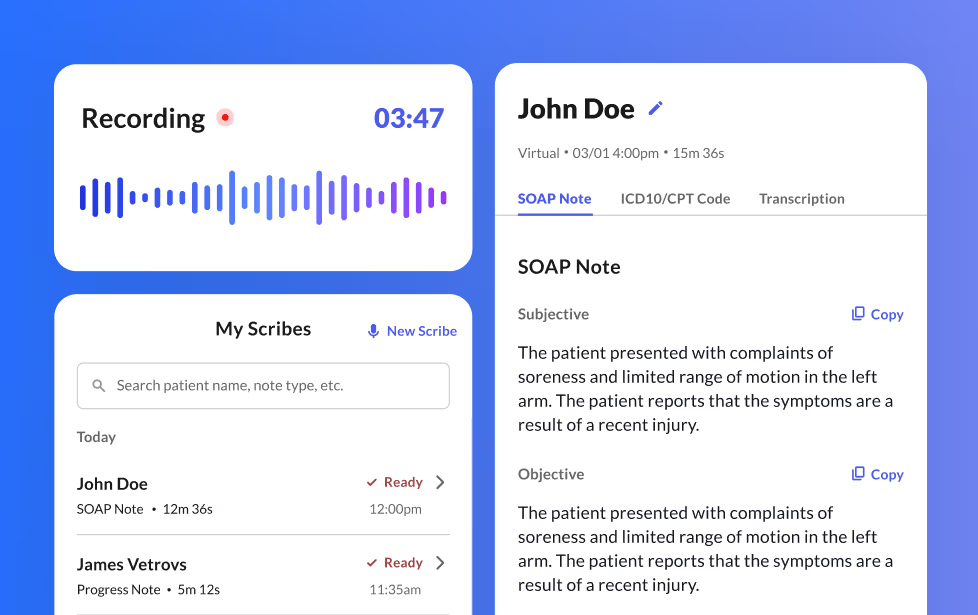
Medical scribe app interface showing a recording waveform, a list of patient notes, and a SOAP note for John Doe.

Stop looking up codes.

Scribe auto-generates them for you.

Try Commure Scribe →

At a glance

Code Family

M25.56: Pain in knee.

DRG Grouping

MS-DRG 555 or 556, signs and symptoms of musculoskeletal system and connective tissue with or without MCC, in MDC 08 under the FY2027 MS-DRG v44 grouper when M25.562 is the principal diagnosis. A principal diagnosis for an inpatient admission only when knee pain is the condition established after study to be chiefly responsible for the admission. If a definitive diagnosis is established during the stay, that diagnosis becomes the principal diagnosis at discharge under UHDDS rules.

HCC Mapping (v28)

None. M25.562 does not map to any CMS-HCC v28 category and did not map to any category in v24.

Condition

Knee pain

Family Specificity

Laterality: right knee, left knee, or unspecified knee. M25.562 is the left-knee code.

Billable

Yes. Valid in the FY2026 code set and unchanged in the FY2027 update.

Which knee pain code do I assign?

The M25.56 subcategory splits knee pain by laterality alone. The choice turns entirely on which knee the provider documented. Pick the side the record states. Reach for the unspecified code only when the chart never names a side.

When documentation says…
Code
Patient presents with left knee pain, no prior diagnosis established
M25.562
Use when the provider documents pain specifically in the left knee and no confirmed underlying pathology explains it. Documentation must name the left knee and must not carry an established structural diagnosis for that joint.
Patient presents with right knee pain
M25.561
Use when the documented pain is in the right knee under the same symptom-level conditions. Documentation must name the right knee.
Bilateral knee pain documented
M25.561 and M25.562 together. No single code carries bilateral knee pain. Report both codes to capture laterality on each side when the provider documents pain in both knees.
Knee pain, side not stated anywhere in the record
M25.569
Use only when laterality is genuinely undocumented. Check the full record for the side first. Query the provider before defaulting to it rather than assigning it as a convenience.

Tabular notes

EXCLUDES1

None. No Excludes1 note sits at M25.562, M25.56, M25.5, category M25, block M20-M25 or Chapter 13.

EXCLUDES2: M25 CATEGORY LEVEL

Abnormality of gait and mobility (R26.-), acquired deformities of limb (M20-M21), calcification of bursa (M71.4-), calcification of shoulder (joint) (M75.3), calcification of tendon (M65.2-), temporomandibular joint disorder (M26.6-) and difficulty in walking (R26.2). These notes sit on category M25 and reach M25.562 through it. An Excludes2 note means the excluded condition is not part of M25. Both codes may be reported together when the patient has both conditions.

EXCLUDES2: M25.5 SUBCATEGORY LEVEL

Pain in hand (M79.64-), pain in fingers (M79.64-), pain in foot (M79.67-), pain in toes (M79.67-) and pain in limb (subcategory M79.6). These notes sit on subcategory M25.5 and reach M25.562 through it. Pain documented in one of these sites is coded to the M79.6- codes rather than to the M25.5 joint pain codes.

CODE FIRST AND USE ADDITIONAL

M25.562 carries no Code first or Use additional note at any level in the FY2027 tabular. Chapter 13 carries a general note to use an external cause code following the code for the musculoskeletal condition, if applicable, to identify the cause.

SYMPTOM CODE CONVENTION

Under ICD-10-CM guideline Section I.B.5, signs and symptoms that are associated routinely with a disease process are not assigned as additional codes, unless otherwise instructed by the classification. Pain is an expected manifestation of documented joint disease. Once joint disease is confirmed, M25.562 is not reported separately for pain that the joint disease explains.

FY2027: EFFECTIVE 1 OCTOBER 2026

None. The FY2027 codes addenda add, delete or revise no code in subcategory M25.56. The FY2027 tabular addenda change no note at M25, M25.5 or M25.56. M25.562 is unchanged in the FY2027 update.

Operational & financial impact

Why specificity matters beyond the chart: risk adjustment, DRG assignment and denial exposure all follow from which code is selected.

CMS-HCC v28 (PY2024+)

No HCC mapping applies. M25.562 does not map to any Hierarchical Condition Category in CMS-HCC v28, which is fully operative at 100% weight for Medicare Advantage payment year 2026. It carried no mapping in the prior v24 model.

Joint pain symptom codes are not included in the CMS-HCC risk adjustment model in either v28 or v24. Reporting M25.562 does not contribute to a beneficiary's risk score.

When the underlying joint condition is identified, such as osteoarthritis, that diagnosis code should be reported and will carry HCC weight if the model assigns it.

INPATIENT SEQUENCING

M25.562 is a principal diagnosis for an inpatient admission only when knee pain is the condition established after study to be chiefly responsible for the admission. When an underlying diagnosis is established during the admission, that definitive diagnosis becomes the principal diagnosis at discharge per UHDDS rules.

MEDICARE COVERAGE

There is no National Coverage Determination specific to M25.562. The code supports medical necessity for knee imaging such as X-ray and MRI, physical therapy, and orthopedic evaluation.

Documentation checklist to support M25.562

Chart elements that support code selection and reduce specificity-driven denials.

FAQ

Can I report M25.562 after osteoarthritis is diagnosed in the same knee?

No. M25.562 is not reported for pain the osteoarthritis explains. Once an underlying pathology is identified, the specific condition code applies: for left knee osteoarthritis that is M17.12 for primary or M17.32 for post-traumatic. Guideline I.B.5 states that signs and symptoms associated routinely with a disease process should not be assigned as additional codes.

How do I code pain in both knees?

Report M25.561 for the right knee and M25.562 for the left knee together. Reserve M25.569 for records where laterality is genuinely unspecified.

When is M25.569 the right choice?

M25.569 applies only when the documentation never identifies which knee is involved. Guideline I.B.13 assigns the unspecified side code when the side is not identified in the medical record. Where the chart specifies the left knee, capture the laterality with M25.562.

Does M25.562 affect a Medicare Advantage risk score?

No. M25.562 carries no HCC mapping in v28 or v24, and joint pain symptom codes are excluded from the CMS-HCC model. The code adds no risk adjustment weight.

Related codes

Codes in the same family as M25.562. Only codes with a published page render as links.

Sibling codes in the M25.56 family

  • M25.561: Pain in right knee.
  • M25.562: Pain in left knee.
  • M25.569: Pain in unspecified knee.

Additional codes to consider

Codes outside the M25.56 family considered alongside M25.562.

Companion: code alongside when documented

  • M25.561: Pain in right knee, reported with M25.562 when bilateral knee pain is documented, under Guideline I.B.13.

Consider instead

  • M17.12: Unilateral primary osteoarthritis, left knee, when osteoarthritis is confirmed.
  • M17.32: Unilateral post-traumatic osteoarthritis, left knee.
  • M23.207: Derangement of unspecified meniscus due to old tear or injury, left knee.
  • M71.162: Other infective bursitis, left knee.
  • S80.02XA: Contusion of left knee, initial encounter.

Sources

All claims on this page derive from government and professional-standards sources.

Stop looking up codes. Scribe generates them for you.

Commure Scribe listens to your visit and auto-generates billing codes, no manual lookup.