
J02.9

J02.9: Acute pharyngitis, unspecified

The ICD-10-CM code for an acute sore throat when the record names no causative organism, carried in the FY2027 tabular under J02.9 as the inclusion term Sore throat (acute) NOS.

Billable
FY2027

TABLE OF CONTENTS

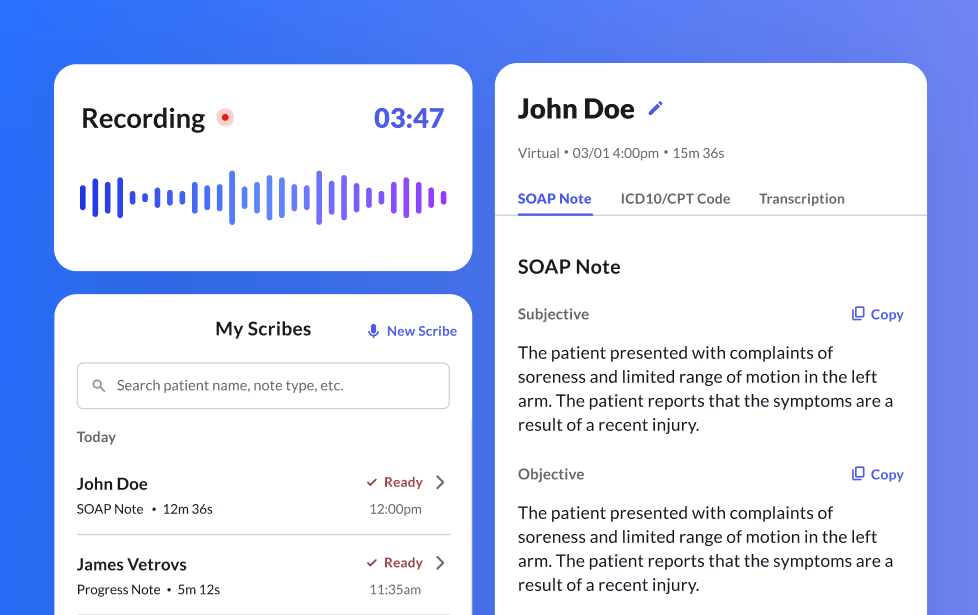
Medical scribe app interface showing a recording waveform, a list of patient notes, and a SOAP note for John Doe.

Stop looking up codes.

Scribe auto-generates them for you.

Try Commure Scribe →

At a glance

Code Family

J02: Acute pharyngitis

DRG Grouping

MS-DRG 152 or MS-DRG 153 in MDC 03 under the FY2027 MS-DRG v44 grouper, depending on whether a secondary MCC is reported.

HCC Mapping (v28)

None. Code J02.9 maps to no HCC in the CMS-HCC v28 mapping.

Condition

Sore throat

Family Specificity

Three billable codes split on the organism the record names, with J02.9 as the residual entry that carries Sore throat (acute) NOS and Pharyngitis (acute) NOS.

Billable

Yes, a valid four character code. Its parent J02 is a category header and cannot be reported.

Which J02 code do I assign?

Category J02 splits on one axis only: the organism the record names as the cause of the sore throat. Group A streptococcus places the encounter in J02.0, another named organism places it in J02.8, and an organism that is unnamed or untested leaves it in J02.9.

When documentation says…
Code
Rapid strep antigen test positive, provider documents strep throat
J02.0
Streptococcal pharyngitis. The provider must name streptococcus as the cause in the note. A positive rapid antigen result or a positive throat culture supports that statement. A result sitting in the lab section alone does not carry the diagnosis. The FY2027 tabular lists Streptococcal sore throat and Septic pharyngitis as inclusion terms under J02.0.
Rapid strep negative, no organism identified
J02.9
Acute pharyngitis, unspecified. A negative strep test does not move the encounter to J02.8. Code J02.8 requires a named organism rather than the absence of streptococcus. Where no organism is named, J02.9 is the correct code.
Throat culture positive for a named non-streptococcal organism
J02.8
Acute pharyngitis due to other specified organisms. Code J02.8 carries a use additional code instruction for B95-B97 to identify the infectious agent. Assign the organism code alongside J02.8. Documentation reading viral without a named virus leaves that instruction with nothing to attach to.
Pharyngitis with a positive monospot for infectious mononucleosis
B27.-
Infectious mononucleosis. Code J02.8 carries an Excludes1 note for acute pharyngitis due to infectious mononucleosis. The same Excludes1 list covers coxsackie virus (B08.5), gonococcus (A54.5), herpes simplex virus (B00.2) and enteroviral vesicular pharyngitis (B08.5). Where one of these organisms is named, its own code replaces J02.8.
Acute tonsillitis documented on examination
J03.90
Acute tonsillitis, unspecified. Category J03 carries an Excludes1 note for acute sore throat (J02.-), for sore throat NOS (J02.9) and for streptococcal sore throat (J02.0). An Excludes1 note means the two are not reported together for the same condition. Where the note documents tonsillitis, a J03 code describes the encounter and no J02 code is added.
Acute upper respiratory infection, site not specified
J06.9
Acute upper respiratory infection, unspecified. Code J06.9 covers an acute upper respiratory infection of multiple or unspecified sites. Where the note names the pharynx as the site, J02.9 is the more specific code. Category J06 carries an Excludes1 note for streptococcal pharyngitis (J02.0).
Sore throat present for three months
J31.2
Chronic pharyngitis. The FY2027 tabular lists Chronic sore throat as an inclusion term under J31.2. Category J02 carries an Excludes2 note for chronic pharyngitis. Code J31.2 carries the reciprocal Excludes2 note for acute pharyngitis. Both codes may be reported where an acute episode is documented on top of a chronic condition.

Tabular notes

EXCLUDES1

Category J02 carries four Excludes1 entries: acute laryngopharyngitis (J06.0), peritonsillar abscess (J36), pharyngeal abscess (J39.1) and retropharyngeal abscess (J39.0). An Excludes1 note means the two codes are not reported together for the same condition. A sore throat arising from a peritonsillar or retropharyngeal abscess belongs to J36, J39.0 or J39.1 rather than to J02.9. Where the record documents both larynx and pharynx involvement, J06.0 describes the encounter. Code J02.9 carries one Excludes1 entry of its own: influenza virus with other respiratory manifestations (J09.X2, J10.1, J11.1). A sore throat documented as a manifestation of influenza is captured by the influenza code. Excludes1 notes outside category J02 also point back at it. Category J00, acute nasopharyngitis and the common cold, excludes acute pharyngitis (J02.-), pharyngitis NOS (J02.9) and sore throat NOS (J02.9). Category J03, acute tonsillitis, excludes acute sore throat (J02.-), sore throat NOS (J02.9) and streptococcal sore throat (J02.0). Code J02.8 carries its own Excludes1 list of five entries that take their own codes: acute pharyngitis due to coxsackie virus (B08.5), due to gonococcus (A54.5), due to herpes simplex virus (B00.2), due to infectious mononucleosis (B27.-) and enteroviral vesicular pharyngitis (B08.5).

EXCLUDES2

Category J02 carries one Excludes2 entry: chronic pharyngitis (J31.2). An Excludes2 note means the excluded condition is not part of J02.9. The patient may carry both conditions. Both codes may be reported where both are documented. Code J31.2 carries the reciprocal Excludes2 entry for acute pharyngitis (J02.9). The FY2027 tabular lists Chronic sore throat as an inclusion term under J31.2. Code J39.2, other diseases of pharynx, also carries an Excludes2 entry for ulcerative pharyngitis (J02.9). Code J02.0 carries an Excludes2 entry for scarlet fever (the A38 codes). Scarlet fever and streptococcal pharyngitis may both be reported where both are documented.

FY2027: EFFECTIVE 1 OCTOBER 2026

Code J02.9 is valid in the FY2026 code set and unchanged in the FY2027 update. Its descriptor, its six inclusion terms and its Excludes1 note for influenza are all unchanged. Category J02 still holds three billable codes: J02.0, J02.8 and J02.9. No child code was added to or deleted from category J02 for FY2026. The FY2027 codes and tabular addenda make no addition, deletion or revision in category J02. The FY2027 MS-DRG grouper is Version 44.0, for discharges on or after 1 October 2026.

Operational & financial impact

Why specificity matters beyond the chart: risk adjustment, DRG assignment and denial exposure all follow from which code is selected.

CMS-HCC v28 (PY2024+)

None. Code J02.9 maps to no HCC in the CMS-HCC v28 ICD-10-CM mapping.

Codes J02.0 and J02.8 map to no HCC either. Moving between the three J02 codes changes no risk adjustment weight.

Acute pharyngitis is a self limited infection. The CMS-HCC model carries chronic and high cost conditions rather than acute upper respiratory infections.

CMS-HCC v28 is fully phased in at 100 percent for payment year 2026.

MS-DRG v44 (FY2027)

MS-DRG 152: Otitis media and URI with MCC.

MS-DRG 153: Otitis media and URI without MCC.

Both MS-DRGs sit in MDC 03, Diseases and Disorders of the Ear, Nose, Mouth and Throat. Both are medical MS-DRGs.

With J02.9 as the principal diagnosis, the case groups to MS-DRG 153 unless a secondary diagnosis on the MCC list is also reported. A reported secondary MCC moves the case to MS-DRG 152.

Code J02.9 also appears as a principal diagnosis in pre-MDC MS-DRG 011, 012 and 013, Tracheostomy for Face, Mouth and Neck Diagnoses or Laryngectomy. Those apply only when a tracheostomy or laryngectomy is performed.

Code J02.9 carries no CC designation and no MCC designation. Reported as a secondary diagnosis it adds no severity weight.

Codes J02.0, J02.8 and J03.90 group to the same MS-DRG 152 and MS-DRG 153 pair. The choice between them does not move the DRG.

Version 44.0 of the grouper applies to discharges on or after 1 October 2026.

Medicare and commercial payers

These MS-DRG rules apply to Medicare Fee for Service inpatient claims. The CMS-HCC v28 rules apply to Medicare Advantage plans for payment year 2026.

Code J02.9 is complete at four characters and needs no further characters.

A sore throat encounter billed on a professional claim carries no DRG at all. There the diagnosis code supports medical necessity for the rapid antigen test or the throat culture.

WHERE SPECIFICITY IS LOST

Where a rapid antigen test or a culture was positive for group A streptococcus and J02.9 was assigned, the claim does not report the confirmed organism. This is the specificity miss the J02 family is built to prevent.

Neither the DRG nor the HCC changes when J02.0 is missed. The loss sits in the clinical record and in quality measurement rather than in the payment.

The pharyngitis diagnosis code feeds the NCQA HEDIS measure Appropriate Testing for Pharyngitis (CWP). The measure reports the share of episodes in which a person diagnosed with pharyngitis and dispensed an antibiotic received a group A streptococcus test.

Where the provider documented acute tonsillitis and J02.9 was assigned, the claim reports the wrong anatomic site. Category J03 carries an Excludes1 note for the J02 sore throat terms.

Where the sore throat is documented as chronic and J02.9 was assigned, the record misses J31.2.

SEVERITY DESIGNATION (MS-DRG V44.0)

J02.9 carries no severity designation. It appears in neither Appendix G, the CC list, nor Appendix H, the MCC list, of the ICD-10 MS-DRG Definitions Manual Version 44.0. A case reaches the higher tier of its DRG pair on a designation carried by another diagnosis.

Documentation checklist to support J02.9

Chart elements that support code selection and reduce specificity-driven denials.

FAQ

What is the ICD-10 code for sore throat?

The code is J02.9, acute pharyngitis, unspecified, where the sore throat is acute and no organism is named. The FY2027 tabular lists Sore throat (acute) NOS as an inclusion term under J02.9. Category J02 carries the includes note acute sore throat. The Alphabetic Index main term Pharyngitis (acute) also defaults to J02.9. A sore throat documented as chronic belongs to J31.2 instead.

Is J02.9 a billable code?

Yes. Code J02.9 is a valid four character billable code. Its parent J02, acute pharyngitis, is a category header and cannot be reported on a claim. Category J02 holds exactly three billable codes: J02.0, J02.8 and J02.9.

When does a positive strep test move the code off J02.9?

The code moves off J02.9 when the provider documents streptococcal pharyngitis or strep throat in the note. A positive rapid antigen result or a positive throat culture supports that statement. The result on its own does not carry the diagnosis. Coders assign from provider documentation. Code J02.0 lists Streptococcal sore throat and Septic pharyngitis as inclusion terms. A confirmed group A streptococcus calls for J02.0 rather than J02.9.

What is the difference between J02.8 and J02.9?

Code J02.8 requires the record to name the organism. Code J02.9 applies where no organism is named. A negative rapid strep test does not move the encounter to J02.8, since a negative result names no organism. Code J02.8 also carries a use additional code instruction for B95-B97 to identify the infectious agent. Five conditions are excluded from J02.8 by an Excludes1 note and take their own codes: coxsackie virus (B08.5), gonococcus (A54.5), herpes simplex virus (B00.2), infectious mononucleosis (B27.-) and enteroviral vesicular pharyngitis (B08.5).

How do I separate acute pharyngitis from acute tonsillitis?

The anatomic site the provider documents separates them. Category J03, acute tonsillitis, carries an Excludes1 note for acute sore throat (J02.-), for sore throat NOS (J02.9) and for streptococcal sore throat (J02.0). An Excludes1 note means the two are not reported together for the same condition. Where the note documents tonsillitis, a J03 code describes the encounter and no J02 code is added. Where the note documents both sites, query the provider to establish which diagnosis the encounter rests on.

Does J02.9 map to an HCC under CMS-HCC v28?

No. Code J02.9 maps to no HCC in the CMS-HCC v28 ICD-10-CM mapping. Codes J02.0 and J02.8 map to no HCC either. Acute pharyngitis is a self limited infection. The model carries chronic and high cost conditions. Code J02.9 also carries no CC designation and no MCC designation. Severity designation and HCC mapping are separate questions and must be checked separately.

How is J02.9 sequenced, and does the setting change it?

Under Section II of the FY2027 ICD-10-CM Official Guidelines, the principal diagnosis is the condition established after study to be chiefly responsible for the admission. Where J02.9 is the reason for the admission, it sequences first and the case groups to MS-DRG 152 or MS-DRG 153. Where the sore throat develops during a stay for another condition, it is a secondary diagnosis that adds no severity weight. Under Section IV, a probable or suspected condition is not coded as confirmed in the outpatient setting. Where the culture is pending, J02.9 is assigned at that visit and J02.0 at the follow up once the organism is documented. On the inpatient side a diagnosis documented as probable or suspected at discharge is coded as confirmed.

What changed for J02.9 in FY2027?

J02.9 is unchanged in the FY2027 update. Its descriptor, its six inclusion terms and its Excludes1 note for influenza are all unchanged. Category J02 still holds three billable codes. No child code was added to or deleted from category J02 for FY2026. The FY2027 codes and tabular addenda, effective 1 October 2026, make no addition, deletion or revision in category J02 either.

Related codes

Codes in the same family as J02.9. Only codes with a published page render as links.

Sibling codes in the J02 family

  • J02.0: Streptococcal pharyngitis.
  • J02.8: Acute pharyngitis due to other specified organisms.

Additional codes to consider

Codes outside the J02 family considered alongside J02.9.

Companion: code alongside when documented

  • J31.2: Chronic pharyngitis, where an acute episode is documented on top of a chronic condition.
  • A38.9: Scarlet fever, uncomplicated, which code J02.0 carries as an Excludes2 entry.
  • B95-B97: Bacterial and viral infectious agents, required as a use additional code with J02.8.

Consider instead

  • J02.0: Streptococcal pharyngitis, where a test confirms group A streptococcus and the provider documents it.
  • J02.8: Acute pharyngitis due to other specified organisms, where the record names the organism.
  • J03.90: Acute tonsillitis, unspecified, where the provider documents tonsillitis rather than pharyngitis.
  • J03.00: Acute streptococcal tonsillitis, unspecified, where both streptococcus and tonsillitis are documented.
  • J06.9: Acute upper respiratory infection, unspecified, where the infection is not localized to the pharynx.
  • J06.0: Acute laryngopharyngitis, which category J02 carries as an Excludes1 entry.
  • J31.2: Chronic pharyngitis, carrying Chronic sore throat as an inclusion term.
  • J36: Peritonsillar abscess, which category J02 carries as an Excludes1 entry.
  • J39.0: Retropharyngeal and parapharyngeal abscess, which category J02 carries as an Excludes1 entry.
  • J39.1: Other abscess of pharynx, which category J02 carries as an Excludes1 entry.
  • B27.90: Infectious mononucleosis, unspecified without complication, which code J02.8 carries as an Excludes1 entry.
  • A54.5: Gonococcal pharyngitis, which code J02.8 carries as an Excludes1 entry.
  • B00.2: Herpesviral gingivostomatitis and pharyngotonsillitis, which code J02.8 carries as an Excludes1 entry.
  • B08.5: Enteroviral vesicular pharyngitis, which code J02.8 carries as an Excludes1 entry.
  • J10.1: Influenza due to other identified influenza virus with other respiratory manifestations, which code J02.9 carries as an Excludes1 entry.
  • R07.0: Pain in throat, where the record documents throat pain without an inflammatory diagnosis.

Sources

All claims on this page derive from government and professional-standards sources.

Stop looking up codes. Scribe generates them for you.

Commure Scribe listens to your visit and auto-generates billing codes, no manual lookup.