
I62.00

I62.00: Nontraumatic subdural hemorrhage, unspecified

The ICD-10-CM code for a subdural hematoma that the record establishes as nontraumatic, when the note does not state whether the collection is acute, subacute or chronic.

Billable
FY2027

TABLE OF CONTENTS

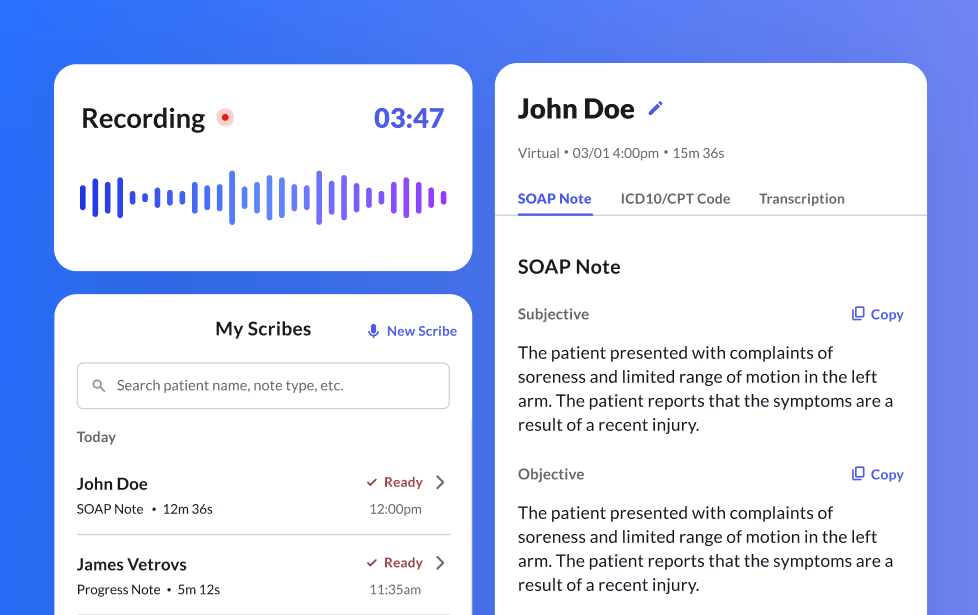
Medical scribe app interface showing a recording waveform, a list of patient notes, and a SOAP note for John Doe.

Stop looking up codes.

Scribe auto-generates them for you.

Try Commure Scribe →

At a glance

Code Family

I62: Other and unspecified nontraumatic intracranial hemorrhage.

DRG Grouping

MS-DRG 064, 065 or 066 in MDC 01 under the FY2027 MS-DRG v44 grouper, depending on a reported secondary CC or MCC and on tPA administration within 24 hours.

HCC Mapping (v28)

HCC 248: Intracranial Hemorrhage.

Condition

Subdural hematoma

Family Specificity

Six billable codes: four in subcategory I62.0, plus I62.1 and I62.9. Subcategory I62.0 splits on acuity across its four codes. Code I62.00 is the entry for a nontraumatic subdural hemorrhage whose acuity the record does not state.

Billable

Yes, a valid five character code. Its parent I62.0 is a subcategory header and cannot be reported.

Which I62 code do I assign?

Block I60-I69 carries an Excludes1 note for traumatic intracranial hemorrhage (S06.-), which puts the traumatic versus nontraumatic split above category I62 rather than inside it. Once the record establishes a nontraumatic bleed, the fifth character of subcategory I62.0 splits on acuity: unspecified, acute, subacute or chronic.

When documentation says…
Code
Subdural hematoma after a fall two days ago
S06.5X-
Traumatic subdural hemorrhage. Block I60-I69 carries an Excludes1 note for traumatic intracranial hemorrhage (S06.-), which means a traumatic code and I62.00 are not reported together for the same condition. Each S06.5X- code needs a sixth character for loss of consciousness and a seventh character for the encounter. Category S06 carries a Code also instruction for any associated open wound of head (S01.-) and skull fracture (the S02.- codes).
Subdural hematoma, no cause stated
S06.5X-
The ICD-10-CM Alphabetic Index lists subdural (traumatic) under the main term Hematoma, with a cross reference to Injury, intracranial, subdural hemorrhage. A separate nontraumatic subentry under that same term cross references Hemorrhage, intracranial, subdural. The unqualified term hematoma routes to the injury entry. The unqualified term subdural hemorrhage routes the other way, to I62.00. Query the provider for the cause before assigning a code from category I62.
Spontaneous subdural hemorrhage, acuity not documented
I62.00
A subdural bleed the record establishes as nontraumatic, with no statement of acute, subacute or chronic. The note must carry two things. The first is a nontraumatic cause, an explicit statement that no trauma occurred, or the term subdural hemorrhage with no stated cause, which the Index sends to I62.00. The second is the absence of any stated acuity. Assigning I62.00 where the provider did document the acuity gives up the more specific code.
Acute nontraumatic subdural hemorrhage
I62.01
Nontraumatic acute subdural hemorrhage. The provider must document the bleed as acute. The acuity has to appear in the provider documentation rather than in the radiology impression alone.
Subacute subdural hemorrhage, nontraumatic
I62.02
Nontraumatic subacute subdural hemorrhage. The provider must document the collection as subacute. Code I62.02 sits between I62.01 and I62.03 on the acuity ladder. Where the record gives an interval in days without using the word subacute, I62.00 is the code the documentation supports.
Chronic subdural hemorrhage, no trauma history
I62.03
Nontraumatic chronic subdural hemorrhage. The provider must document the collection as chronic. Category I62 carries no combination code for an acute bleed into a chronic collection. Where the record documents acute on chronic, the two acuities have separate codes in I62.01 and I62.03.
Nontraumatic intracranial hemorrhage, compartment not named
I62.9
Nontraumatic intracranial hemorrhage, unspecified. Assign I62.9 where the record establishes a nontraumatic intracranial bleed without naming where it sits. Code I62.00 already names the subdural space. It is the more specific of the two.

Tabular notes

EXCLUDES1

Block I60-I69 carries one Excludes1 note: traumatic intracranial hemorrhage (the S06.- codes). An Excludes1 note means the two codes are not reported together for the same condition. A subdural bleed the record attributes to trauma belongs in the S06.5X- codes rather than in category I62. This is the only Excludes1 note that reaches I62.00. Category S06 carries its own Excludes1 note for head injury NOS (S09.90).

EXCLUDES2

Category I62 carries one Excludes2 note: sequelae of intracranial hemorrhage (I69.2). An Excludes2 note means the excluded condition is not part of I62.00. The patient may carry both. A deficit that persists after the hemorrhage itself has resolved is described by the I69.2- codes, such as the I69.25- codes for hemiplegia and hemiparesis following other nontraumatic intracranial hemorrhage. Both codes may be reported where an active bleed and an older deficit are both documented.

USE ADDITIONAL

Category I62 instructs the coder to use an additional code, if known, to indicate National Institutes of Health Stroke Scale (NIHSS) score (the R29.7- codes). Code R29.7 carries its own Code first instruction for the type of cerebral infarction (I60.-, I61.-, I62.-, I63.-) in FY2027. FY2027 added I60.-, I61.- and I62.- to that note.

Block I60-I69 instructs the coder to use an additional code to identify the presence of: alcohol abuse and dependence (F10.-), exposure to environmental tobacco smoke (Z77.22), history of tobacco dependence (Z87.891), hypertension (I10–I1A), occupational exposure to environmental tobacco smoke (Z57.31), tobacco dependence (F17.-), and tobacco use (Z72.0).

FY2027: EFFECTIVE 1 OCTOBER 2026

The FY2027 codes addenda make no addition, deletion or revision in category I62, and the I62 notes are unchanged. Three related notes changed. The Code first note at R29.7 now lists I62.- among the stroke types, which ties the NIHSS score to I62.00. G93.5, Compression of brain, gained the inclusion term Midline shift of brain. S06.A, Traumatic brain compression and herniation, gained the inclusion term Traumatic midline shift of brain.

Operational & financial impact

Why specificity matters beyond the chart: risk adjustment, DRG assignment and denial exposure all follow from which code is selected.

CMS-HCC v28 (PY2024+)

HCC 248: Intracranial Hemorrhage.

Code I62.00 maps to HCC 248 in the CMS-HCC v28 ICD-10-CM mapping.

Codes I62.01, I62.02, I62.03 and I62.9 map to the same HCC 248. Acuity does not change the risk adjustment category inside subcategory I62.0.

The S06.5X- codes map into the CMS-HCC v28 head injury categories rather than into HCC 248.

HCC 397: Major Head Injury with Loss of Consciousness greater than 1 Hour.

HCC 398: Major Head Injury with Loss of Consciousness less than 1 Hour or Unspecified.

HCC 399: Major Head Injury without Loss of Consciousness.

The traumatic versus nontraumatic decision moves the case between two separate HCC families.

For Medicare Advantage risk adjustment, the diagnosis must appear on a dated encounter note from the calendar year rather than only on a problem list.

MS-DRG v44 (FY2027)

MS-DRG 064: Intracranial hemorrhage or cerebral infarction with MCC.

MS-DRG 065: Intracranial hemorrhage or cerebral infarction with CC or tPA in 24 hours.

MS-DRG 066: Intracranial hemorrhage or cerebral infarction without CC/MCC.

All three sit in MDC 01, Diseases and Disorders of the Nervous System.

With I62.00 as the principal diagnosis and no operating room procedure reported, the case groups to MS-DRG 064, 065 or 066.

An operative evacuation moves the case to a surgical MS-DRG in MDC 01 rather than the medical triplet.

Reported as a secondary diagnosis, I62.00 carries MCC severity under Appendix C of the FY2027 MS-DRG Definitions Manual, Version 44.0. Codes I62.01, I62.02 and I62.03 carry MCC severity as well.

A principal diagnosis never acts as its own MCC. Reporting I62.00 first does not by itself produce MS-DRG 064.

Version 44.0 of the grouper applies to discharges on or after 1 October 2026.

Medicare and commercial payers

These MS-DRG rules apply to Medicare Fee for Service inpatient claims.

The CMS-HCC v28 rules apply to Medicare Advantage plans for payment year 2026.

Code I62.00 is complete at five characters and takes no seventh character. Every code in the S06.5X- range does take one.

WHERE SPECIFICITY IS LOST

Where the record documents trauma and I62.00 was assigned, the claim reports a nontraumatic bleed against an Excludes1 note. The encounter also loses the seventh character that records whether this is the initial encounter, a subsequent encounter or a sequela. It loses the loss of consciousness detail carried by the sixth character as well.

Where the provider documented the acuity and I62.00 was assigned, the case loses I62.01, I62.02 or I62.03. All four codes in subcategory I62.0 carry MCC severity and map to HCC 248. The DRG assignment and the risk adjustment category do not move across this acuity ladder.

Where the record establishes a subdural bleed and I62.9 was assigned, the claim does not name the compartment. Both codes map to HCC 248.

Where the hemorrhage has resolved and only a deficit remains, I62.00 reports an active bleed. The I69.2- codes describe the residual.

Where brain compression, midline shift or herniation is documented and G93.5 was omitted, the record loses a separately reportable condition. From FY2027, midline shift of brain is a G93.5 inclusion term. Code G93.5 carries an Excludes1 note for traumatic compression of brain (the S06.A- codes), and the two are not reported together for the same condition.

SEVERITY DESIGNATION (MS-DRG V44.0)

I62.00 is an MCC. It appears in Appendix H, diagnoses defined as major complications or comorbidities, in the ICD-10 MS-DRG Definitions Manual Version 44.0. As a secondary diagnosis it can move a case to the with-MCC tier of its DRG pair.

Documentation checklist to support I62.00

Chart elements that support code selection and reduce specificity-driven denials.

FAQ

Is a subdural hematoma coded to I62.00 or to the S06.5X- codes?

It turns on whether the record ties the bleed to trauma. Block I60-I69 carries an Excludes1 note for traumatic intracranial hemorrhage (the S06.- codes). A bleed documented as traumatic is coded in the S06.5X- range and not in category I62. The ICD-10-CM Alphabetic Index lists subdural (traumatic) under the main term Hematoma, with a cross reference to Injury, intracranial, subdural hemorrhage. A separate nontraumatic subentry under that same term cross references Hemorrhage, intracranial, subdural. For the term subdural hematoma, assigning I62.00 requires the record to establish that the bleed is nontraumatic. The term subdural hemorrhage with no stated cause goes the other way. The Index sends Hemorrhage, subdural through Hemorrhage, intracranial, subdural to I62.00, and a documented acute bleed takes I62.01.

What does the S06.5X- code structure look like?

Each code carries a sixth character for loss of consciousness and a seventh character for the encounter. The sixth character runs from 0 for without loss of consciousness, through graded durations, to A for loss of consciousness status unknown and 9 for loss of consciousness of unspecified duration. The seventh character is A for the initial encounter, D for a subsequent encounter and S for a sequela. Category S06 carries a note that the seventh characters D and S do not apply to codes with a sixth character of 7 or 8. Those sixth characters describe death due to brain injury or another cause before the patient regained consciousness. Subcategory S06.5 also instructs the coder to use an additional code, if applicable, for traumatic brain compression or herniation (the S06.A- codes).

Is I62.00 a billable code?

Yes. Code I62.00 is a valid five character billable code. Its parent I62.0, nontraumatic subdural hemorrhage, is a subcategory header and cannot be reported on a claim. Category I62 as a whole cannot be reported either. Code I62.00 takes no seventh character.

Is I62.00 a CC or an MCC?

Reported as a secondary diagnosis, I62.00 carries MCC severity under Appendix C of the FY2027 MS-DRG Definitions Manual, Version 44.0. Codes I62.01, I62.02 and I62.03 carry MCC severity as well. Severity designation and HCC mapping are separate questions and must be checked separately.

Does I62.00 map to an HCC under CMS-HCC v28?

Yes. Code I62.00 maps to HCC 248, Intracranial Hemorrhage, in the CMS-HCC v28 ICD-10-CM mapping. Codes I62.01, I62.02, I62.03 and I62.9 map to the same HCC 248. The traumatic S06.5X- codes map instead into the head injury categories HCC 397, HCC 398 and HCC 399.

What has to be in the note to support I62.01 instead of I62.00?

The provider documentation must apply the word acute to the subdural hemorrhage. Code I62.02 needs subacute and I62.03 needs chronic. Code I62.00 is the entry for a nontraumatic subdural hemorrhage with no stated acuity. Category I62 carries no combination code for an acute bleed into a chronic collection. Where the record documents acute on chronic, the two acuities have separate codes in I62.01 and I62.03.

How is I62.00 sequenced?

Under Section II of the FY2027 ICD-10-CM Official Guidelines, the principal diagnosis is the condition established after study to be chiefly responsible for the admission. Where the subdural hemorrhage is the reason for admission, I62.00 is sequenced first and the case groups to MS-DRG 064, 065 or 066. Where the bleed develops during a stay for another condition, it is reported as a secondary diagnosis and supplies MCC severity. A principal diagnosis never acts as its own MCC.

What changed for I62.00 in FY2027?

I62.00 is unchanged in the FY2027 update. The update, effective 1 October 2026, makes no addition, deletion or revision in category I62. It does revise the Code first note at R29.7, the NIHSS score, to list I60.-, I61.- and I62.- alongside the I63.- codes. It also adds Midline shift of brain as an inclusion term at G93.5 and Traumatic midline shift of brain as an inclusion term at S06.A.

Related codes

Codes in the same family as I62.00. Only codes with a published page render as links.

Sibling codes in the I62 family

  • I62.01: Nontraumatic acute subdural hemorrhage.
  • I62.02: Nontraumatic subacute subdural hemorrhage.
  • I62.03: Nontraumatic chronic subdural hemorrhage.
  • I62.1: Nontraumatic extradural hemorrhage.
  • I62.9: Nontraumatic intracranial hemorrhage, unspecified.

Additional codes to consider

Codes outside the I62 family considered alongside I62.00.

Companion: code alongside when documented

  • R29.7-: National Institutes of Health Stroke Scale (NIHSS) score, instructed as a Use Additional code at category I62.
  • I10–I1A: Hypertension, instructed as a Use Additional code at block I60-I69.
  • F10-: Alcohol related disorders.
  • F17-: Nicotine dependence.
  • Z72.0: Tobacco use.
  • Z77.22: Contact with and (suspected) exposure to environmental tobacco smoke (acute) (chronic).
  • Z57.31: Occupational exposure to environmental tobacco smoke.
  • Z87.891: Personal history of nicotine dependence.
  • Z79.01: Long term (current) use of anticoagulants, when long-term anticoagulant therapy is documented (Guideline I.C.21.c.3).
  • Z79.02: Long term (current) use of antithrombotics/antiplatelets, when long-term therapy is documented (Guideline I.C.21.c.3).

Consider instead

  • S06.5X-: Traumatic subdural hemorrhage, where the record ties the bleed to trauma.
  • S06.A-: Traumatic brain compression and herniation, which carries a Code first instruction for traumatic subdural hemorrhage (the S06.5- codes).
  • I60-: Nontraumatic subarachnoid hemorrhage.
  • I61-: Nontraumatic intracerebral hemorrhage.
  • I62.1: Nontraumatic extradural hemorrhage, for a nontraumatic epidural collection.
  • I62.9: Nontraumatic intracranial hemorrhage, unspecified, where the compartment is not named.
  • I69.2-: Sequelae of other nontraumatic intracranial hemorrhage, where the bleed has resolved and a deficit remains.
  • P10.0: Subdural hemorrhage due to birth injury.
  • P52.8: Other intracranial (nontraumatic) hemorrhages of newborn.
  • S09.90X-: Unspecified injury of head, which category S06 carries as an Excludes1 note.

Sources

All claims on this page derive from government and professional-standards sources.

Stop looking up codes. Scribe generates them for you.

Commure Scribe listens to your visit and auto-generates billing codes, no manual lookup.