
F39

F39: Unspecified mood [affective] disorder

The ICD-10-CM code for a mood disorder when the record establishes a mood disturbance but specifies neither polarity nor episode pattern.

Billable
FY2027

TABLE OF CONTENTS

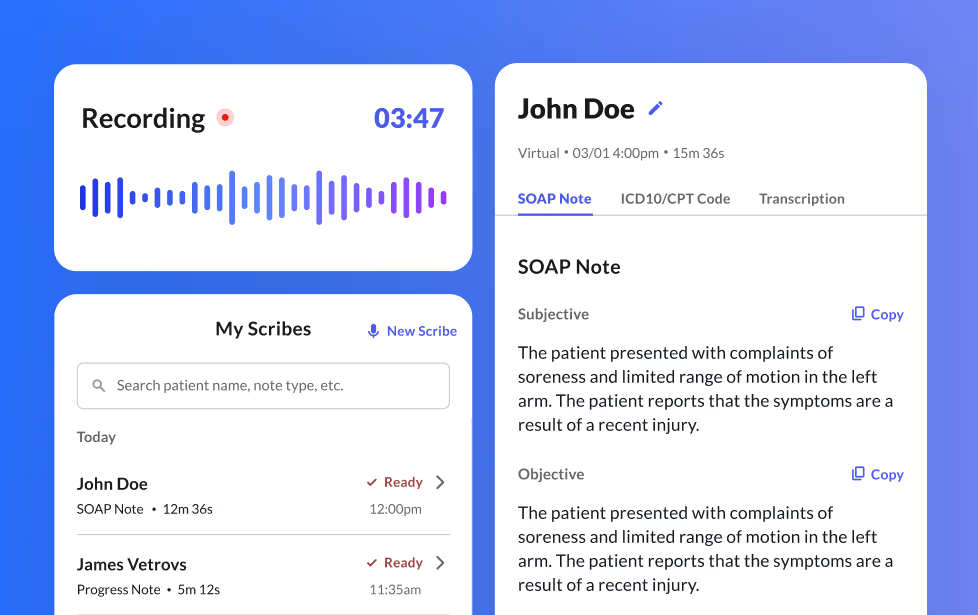
Medical scribe app interface showing a recording waveform, a list of patient notes, and a SOAP note for John Doe.

Stop looking up codes.

Scribe auto-generates them for you.

Try Commure Scribe →

At a glance

Code Family

F39: Unspecified mood [affective] disorder, a three character category with no child codes.

DRG Grouping

MS-DRG 885, Psychoses, within MDC 19 under the FY2027 MS-DRG v44 grouper, a single DRG carrying no with-CC or with-MCC variant.

HCC Mapping (v28)

None. F39 maps to no condition category in the CMS-HCC v28 model.

Condition

Mood disorder

Family Specificity

No decimal extension exists. Specificity is gained by moving to another category in the F30–F39 block rather than by adding a character to F39.

Effective Date

Valid in the FY2026 code set and unchanged in the FY2027 update.

Which F30–F39 code do I assign?

The F30–F39 block splits first on polarity, then on episode pattern and severity. F39 sits outside both axes and is correct only when the record establishes a mood disorder while specifying neither.

When documentation says…
Code
Major depression, first episode
F32.-
A single episode of major depression. The fourth character carries severity, from mild (F32.0) through severe with psychotic features (F32.3). The note must establish that this is the first episode.
Recurrent depression, prior episodes documented
F33.-
Major depressive disorder with more than one episode. The note must document at least one prior depressive episode separated by remission. Recurrent severe without psychotic features is F33.2.
Depression with a past manic or hypomanic episode
F31.-
Bipolar disorder, coded to the current episode rather than to the depression alone. A single manic episode with no depressive history goes to the F30 codes instead, because F31 carries an Excludes1 note for it.
Elevated mood, first episode, no depressive history
F30.-
A manic episode where bipolar disorder is not established. The category includes bipolar disorder single manic episode and mixed affective episode.
Low grade depression lasting two years or more
F34.1
Dysthymic disorder, also reported under the name persistent depressive disorder. The note must document chronicity rather than a discrete episode.
Alternating mild highs and lows, chronic course
F34.0
Cyclothymic disorder. Category F31 carries an Excludes2 note for cyclothymia. Both codes may be reported when both conditions are documented.
Mood disorder, polarity and episode not stated
F39
A mood disorder the provider has diagnosed without naming depression, mania or hypomania. The note must be silent on polarity rather than contradict it. Query the provider when the record could support a specific category.

Tabular notes

INCLUSION TERM

F39 carries one inclusion term in the FY2027 tabular: Affective psychosis NOS. The descriptor itself names no psychotic feature. F39 carries no Use additional, Code also or Code first instruction.

EXCLUDES1

F39 carries no Excludes1 note in the FY2027 tabular. The Excludes1 notes that separate the specified mood categories sit on those categories rather than on F39. Category F30 excludes bipolar disorder (F31.-), major depressive disorder single episode (F32.-) and major depressive disorder recurrent (the F33 codes). Category F31 excludes bipolar disorder single manic episode (F30.-), major depressive disorder single episode (F32.-) and major depressive disorder recurrent (the F33 codes). Category F32 excludes bipolar disorder (F31.-), manic episode (F30.-) and recurrent depressive disorder (the F33 codes). Category F33 excludes bipolar disorder (F31.-) and manic episode (the F30 codes). Excludes1 means those pairs are not reported together for the same condition.

EXCLUDES2

F39 carries no Excludes2 note of its own. Chapter 5 carries a chapter level Excludes2 for symptoms, signs and abnormal clinical laboratory findings, not elsewhere classified (R00–R99). Category F31 carries an Excludes2 for cyclothymia (F34.0). Category F32 carries an Excludes2 for adjustment disorder (F43.2). Subcategory F06.3 carries an Excludes2 for mood disorders not due to known physiological condition or unspecified (F30–F39). A second Excludes2 there covers mood disorders due to alcohol and other psychoactive substances (F10–F19 with .14, .24, .94). An Excludes2 note permits both codes when both conditions are documented.

FY2027: EFFECTIVE 1 OCTOBER 2026

F39 is unchanged in the FY2027 update. The FY2027 addenda add one chapter 5 code, F64.A, and revise instructional notes at F02 and F64.1. None of these changes touches F39 or the F30–F39 block.

Operational & financial impact

Why specificity matters beyond the chart: risk adjustment, DRG assignment and denial exposure all follow from which code is selected.

CMS-HCC v28 (PY2024+)

F39 maps to no condition category in the CMS-HCC v28 model.

The v28 model carries five psychiatric condition categories: HCC 151 Schizophrenia, HCC 152 Psychosis Except Schizophrenia, HCC 153 Personality Disorders and Anorexia or Bulimia Nervosa, HCC 154 Bipolar Disorders without Psychosis, and HCC 155 Major Depression Moderate or Severe without Psychosis.

F39 appears in none of those five code lists. Neither does dysthymic disorder (F34.1), depression unspecified (F32.A), major depressive disorder single episode unspecified (F32.9) or major depressive disorder recurrent unspecified (F33.9).

The v28 depression mapping turns on documented severity. Among the mood codes, HCC 155 is reached by F32.1, F32.2, F33.1 and F33.2. Mild major depression (F32.0 and F33.0), unspecified major depression (F32.9 and F33.9), unspecified depression (F32.A) and major depression in remission reach no category.

The v28 bipolar mapping does not turn on severity in the same way. Bipolar disorder unspecified (F31.9) reaches HCC 154, as do F30.9, F31.0, F31.4 and F31.81.

Major depression and mania with psychotic features move to HCC 152 rather than to HCC 155 or HCC 154. Among the mood codes, that category is reached by F30.2, F31.2, F31.5, F31.64, F32.3 and F33.3.

CMS-HCC v28 is fully phased in at 100 percent for payment year 2026.

MS-DRG v44 (FY2027)

MS-DRG 885: Psychoses. F39 groups to MS-DRG 885 within MDC 19, Mental Diseases and Disorders, under the FY2027 MS-DRG v44 grouper.

MS-DRG 885 carries no with-CC or with-MCC variant. There is no DRG pair to describe for this code.

Dysthymic disorder (F34.1) groups instead to MS-DRG 881, Depressive Neuroses, which is also a single unsplit DRG. The choice between F39 and F34.1 changes the inpatient DRG.

Medicare and commercial payers

There is no National Coverage Determination specific to mood disorder diagnosis coding.

These risk adjustment rules apply to Medicare Advantage plans using CMS-HCC v28 for payment year 2026.

WHERE SPECIFICITY IS LOST

F39 names neither polarity nor episode pattern, and it reaches no CMS-HCC v28 category.

The first pattern is a record documenting prior depressive episodes, which supports the F33 codes rather than F39.

The second is a record documenting a past manic or hypomanic episode, which supports the F31 codes and reaches HCC 154.

The third is a mood disorder attributed to a general medical condition or to a substance, which belongs in the F06.3 codes or in the F10–F19 blocks rather than anywhere in F30–F39.

Documentation checklist to support F39

Chart elements that support code selection and reduce specificity-driven denials.

FAQ

Is F39 a billable code, and what is the decimal extension?

F39 is billable and there is no decimal extension. It is a three character category with no child codes, which makes the three character code itself the code you report.

When should I use F39 instead of F32.A?

F32.A is depression, unspecified, and sits inside the depressive episode category. Use it when depression is the documented diagnosis but severity and episode count are not stated. Use F39 only when the record does not establish which pole the mood disturbance falls on. A note naming depression supports F32.A rather than F39.

Does F39 map to an HCC under CMS-HCC v28?

No. F39 appears in none of the five psychiatric condition categories in the v28 model. Bipolar disorder unspecified (F31.9) reaches HCC 154, and major depressive disorder recurrent moderate (F33.1) reaches HCC 155. Moving to the correct category can restore a mapping that F39 does not carry.

What must the record show to support F39?

It must show a provider diagnosis of a mood disorder. It must also leave polarity or episode pattern unstated rather than documented. A note naming depression, mania, hypomania or a prior episode supports a more specific code in the F30, F31, F32, F33 or F34 categories.

How is a mood disorder caused by another condition or by a substance coded?

It moves out of the F30–F39 block. A mood disorder due to a known physiological condition is coded to the F06.3 codes, with the underlying physiological condition sequenced first under the Code first instruction at category F06. A substance induced mood disorder is coded in the F10–F19 blocks, where the fourth character carries the use pattern and a fifth character of 4 carries the induced mood disorder. Alcohol dependence with alcohol-induced mood disorder is F10.24.

Can F39 be the principal diagnosis on an inpatient admission?

Yes. F39 groups to MS-DRG 885, Psychoses, within MDC 19 under the FY2027 MS-DRG v44 grouper. A record supporting a specific mood category should carry that code instead. Dysthymic disorder groups to a different DRG, MS-DRG 881 Depressive Neuroses.

Does anything about F39 change in FY2027?

No. F39 is unchanged in the FY2027 update, effective 1 October 2026, and its descriptor still reads unspecified mood [affective] disorder. The FY2027 addenda add one chapter 5 code, F64.A, and revise notes at F02 and F64.1. None of these changes touches F39.

Why does DSM-5 have no mood disorders category when ICD-10-CM does?

DSM-5 dissolved the mood disorders class in 2013 and replaced it with two top level chapters, bipolar and related disorders and depressive disorders. ICD-10-CM kept the F30–F39 block titled mood [affective] disorders. DSM-5-TR reinstated unspecified mood disorder in 2022, and the American Psychiatric Association describes that reinstatement as restoring alignment with ICD-10-CM and ICD-11.

Related codes

Codes in the same family as F39. Only codes with a published page render as links.

Sibling codes in the F39 family

  • F30-: Manic episode.
  • F31-: Bipolar disorder.
  • F32-: Depressive episode.
  • F33-: Major depressive disorder, recurrent.
  • F34-: Persistent mood [affective] disorders.

Additional codes to consider

Codes outside the F39 family considered alongside F39.

Companion: code alongside when documented

  • R45.851: Suicidal ideations, permitted alongside F39 by the chapter 5 Excludes2 note for R00–R99.
  • R45.850: Homicidal ideations, under the same chapter 5 Excludes2 note.
  • R45.88: Nonsuicidal self-harm, under the same chapter 5 Excludes2 note.
  • Z91.51: Personal history of suicidal behavior, under Guideline I.C.21.c.4 when a past suicide attempt is documented.
  • Z79.899: Other long term (current) drug therapy, under Guideline I.C.21.c.3 when a medication is prescribed for long-term use.

Consider instead

  • F32.9: Major depressive disorder, single episode, unspecified.
  • F32.A: Depression, unspecified.
  • F33.9: Major depressive disorder, recurrent, unspecified.
  • F33.2: Major depressive disorder, recurrent severe without psychotic features.
  • F31.9: Bipolar disorder, unspecified.
  • F31.81: Bipolar II disorder.
  • F30.9: Manic episode, unspecified.
  • F34.1: Dysthymic disorder.
  • F34.0: Cyclothymic disorder.
  • F34.81: Disruptive mood dysregulation disorder.
  • F06.30: Mood disorder due to known physiological condition, unspecified.
  • F06.31: Mood disorder due to known physiological condition with depressive features.
  • F06.33: Mood disorder due to known physiological condition with manic features.
  • F10.24: Alcohol dependence with alcohol-induced mood disorder.
  • F10.94: Alcohol use, unspecified with alcohol-induced mood disorder.
  • F43.21: Adjustment disorder with depressed mood.
  • F43.20: Adjustment disorder, unspecified.
  • F25.9: Schizoaffective disorder, unspecified.
  • F53.0: Postpartum depression.

Sources

All claims on this page derive from government and professional-standards sources.

Stop looking up codes. Scribe generates them for you.

Commure Scribe listens to your visit and auto-generates billing codes, no manual lookup.