
E78.1

E78.1: Pure hyperglyceridemia

The ICD-10-CM code for hypertriglyceridemia when the record documents an isolated triglyceride elevation and does not also document the cholesterol as elevated.

Billable
FY2027

TABLE OF CONTENTS

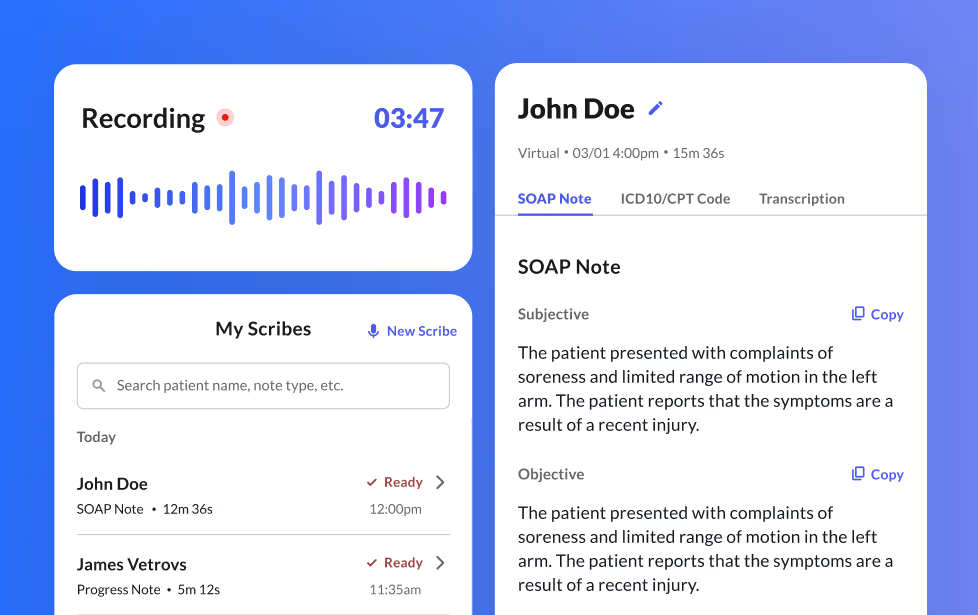
Medical scribe app interface showing a recording waveform, a list of patient notes, and a SOAP note for John Doe.

Stop looking up codes.

Scribe auto-generates them for you.

Try Commure Scribe →

At a glance

Code Family

E78: Disorders of lipoprotein metabolism and other lipidemias.

Condition

Hypertriglyceridemia

Billable

Yes. E78.1 is a four character leaf code with no children and requires no further characters.

HCC Mapping (v28)

None. No code in category E78 appears in the diagnosis to condition category crosswalk distributed with the CMS-HCC Version 28 model software.

DRG Grouping

MS-DRG 642, inborn and other disorders of metabolism, in MDC 10 under the FY2027 MS-DRG v44 grouper. The group carries no severity split.

Family Specificity

Eighteen billable codes in category E78, split on which lipid fraction the record names as elevated. E78.1 is the isolated triglyceride elevation and carries no severity axis.

Which E78 code do I assign?

Category E78 splits on which lipid fraction the record documents as elevated. It does not split on how high the value runs, because the FY2027 tabular carries no severity axis anywhere in the category.

When documentation says…
Code
Hypertriglyceridemia, elevated triglycerides or elevated fasting triglycerides, with no cholesterol elevation stated
E78.1
Pure hyperglyceridemia. Elevated fasting triglycerides is a printed inclusion term at E78.1 in the FY2027 tabular. The Alphabetic Index entry Hypertriglyceridemia, essential leads to E78.1. The index subterm triglycerides under Elevated, elevation leads there as well. The note must establish the triglyceride elevation as a diagnosis and must not also name the cholesterol as elevated.
Elevated cholesterol with elevated triglycerides, mixed hyperlipidemia or combined hyperlipidemia
E78.2
Mixed hyperlipidemia. Elevated cholesterol with elevated triglycerides NEC and Combined hyperlipidemia NOS are both printed inclusion terms at E78.2. Both fractions must be documented as elevated. A panel showing a raised cholesterol alongside the raised triglyceride supports E78.2 rather than E78.1. The cholesterol elevation has to be stated by the provider. Section I.A.19 of the FY2027 ICD-10-CM Official Guidelines bases code assignment on the diagnostic statement rather than on the panel result standing alone.
Hyperlipidemia or dyslipidemia, with no lipid fraction named
E78.5
Hyperlipidemia, unspecified. The Alphabetic Index sends Hyperlipemia, hyperlipidemia to E78.5. It sends Dyslipidemia to E78.5 as well. E78.5 is correct only where the record names no fraction. Where the encounter carries a lipid panel and a provider statement identifying which fraction is raised, that fraction decides the code.
Chylomicronemia, familial chylomicronemia syndrome or mixed hyperglyceridemia
E78.3
Hyperchylomicronemia. Mixed hyperglyceridemia and Fredrickson's hyperlipoproteinemia, type I or V are printed inclusion terms at E78.3. The Alphabetic Index sends Hyperchylomicronemia (familial) (primary) to E78.3. The index subterm mixed under Hyperglyceridemia lands there as well. The National Lipid Association's ICD-10 reference for lipid management, updated July 2026, lists severe hypertriglyceridemia, multifactorial chylomicronemia syndrome and persistent chylomicronemia syndrome at E78.3.
Elevated cholesterol alone, or hypercholesterolemia with no triglyceride elevation stated
E78.00
Pure hypercholesterolemia, unspecified. The index subterm cholesterol under Elevated, elevation leads to E78.00. Where the record documents familial hypercholesterolemia, the FY2027 tabular requires a sixth character. E78.010 is the homozygous form, E78.011 is the heterozygous form and E78.019 is used where the form is not stated.
Elevated lipoprotein(a) or elevated Lp(a)
E78.41
Elevated Lipoprotein(a). Elevated Lp(a) is the printed inclusion term. Lipoprotein(a) is a separate measurement from the triglyceride. The tabular carries no Excludes note between E78.1 and E78.41. Both codes are reported where both elevations are documented.
Familial combined hyperlipidemia
E78.49
Other hyperlipidemia. Familial combined hyperlipidemia is the printed inclusion term at E78.49. The Excludes1 note at E78.2 names familial combined hyperlipidemia (E78.49) explicitly. E78.2 and E78.49 are therefore never reported together for the same lipid disorder.

Tabular notes

EXCLUDES1

Excludes1 at category E78: sphingolipidosis (E75.0-E75.3). That is the only Excludes note printed at the category level. E78.1 inherits it. An Excludes1 note means not coded here. E78.1 is not reported with a code from E75.0-E75.3 for the same disorder. E78.1 itself carries no Excludes note of any kind in the FY2027 tabular. Two other entries in the family do. Code E78.2 carries Excludes1 notes for cerebrotendinous cholesterosis [van Bogaert-Scherer- Epstein] (E75.5) and for familial combined hyperlipidemia (E78.49). Subcategory E78.7 carries an Excludes1 note for Niemann-Pick disease type C (E75.242). The Metabolic disorders block (E70-E88) adds Excludes1 notes for androgen insensitivity syndrome (E34.5-), congenital adrenal hyperplasia (E25.0), hemolytic anemias attributable to enzyme disorders (D55.-), Marfan syndrome (Q87.4-) and 5-alpha-reductase deficiency (E29.1).

EXCLUDES2

Excludes2 at the Metabolic disorders block (E70-E88): Ehlers-Danlos syndromes (the Q79.6 codes). An Excludes2 note means the patient may have both conditions. Both are reported when both are documented. No Excludes2 note is printed at category E78 or at E78.1.

FY2027: EFFECTIVE 1 OCTOBER 2026

The FY2027 codes and tabular addenda make no addition, deletion or revision in category E78. The E78.1 descriptor and its six inclusion terms are unchanged in the FY2027 update. Category E78 changed in FY2026, effective 1 October 2025, per the CMS MS-DRG Definitions Manuals, v42.0 (FY2025) and v43.0 (FY2026). The previously billable code E78.01, familial hypercholesterolemia, became a subcategory with three codes: E78.010 for the homozygous form, E78.011 for the heterozygous form and E78.019 where the form is not stated. E78.01 is no longer billable on its own. Category E78 and code E78.1 carry no Use additional code, Code also, Code first or seventh character instruction in the FY2027 tabular.

Operational & financial impact

Why specificity matters beyond the chart: risk adjustment, DRG assignment and denial exposure all follow from which code is selected.

CMS-HCC v28 (PY2024+)

E78.1 does not map to any condition category under CMS-HCC Version 28.

No code in category E78 appears in the diagnosis to condition category crosswalk distributed with the CMS-HCC model software. E78.010, E78.011 and E78.019 took effect after that crosswalk file. Their absence from it does not establish their mapping.

E78.1 therefore contributes no risk adjustment weight to a Medicare Advantage risk score.

The risk adjustment value in a hypertriglyceridemia encounter sits with the companion conditions. E11.9, type 2 diabetes mellitus without complications, maps to HCC 38, Diabetes with Glycemic, Unspecified, or No Complications. E66.01 and E66.2 map to HCC 48, Morbid Obesity. K86.0 and K86.1 map to HCC 79, Chronic Pancreatitis.

E66.9, obesity unspecified, carries no Version 28 category. Reaching HCC 48 requires the record to document the obesity as morbid or severe, which supports E66.01, or as morbid obesity with alveolar hypoventilation, which supports E66.2.

V24 TO V28 TRANSITION

E78.1 carried no condition category under CMS-HCC Version 24 either. No code in category E78 appears in the Version 24 crosswalk.

The move from Version 24 to Version 28 changes nothing for this code.

The companion codes did move. Type 2 diabetes mellitus without complications sat in HCC 19 under Version 24 and sits in HCC 38 under Version 28. Morbid obesity due to excess calories sat in HCC 22 and sits in HCC 48.

MS-DRG v44 (FY2027)

MS-DRG 642: inborn and other disorders of metabolism.

E78.1 as a principal diagnosis groups to MS-DRG 642 in MDC 10, endocrine, nutritional and metabolic diseases and disorders, under the FY2027 MS-DRG v44 grouper.

MS-DRG 642 carries no severity split. There is no with MCC, with CC or without CC or MCC variant of it. No secondary diagnosis moves a tier within the group.

Where severe hypertriglyceridemia precipitates acute pancreatitis, the pancreatitis is the condition that occasions the admission and carries the DRG. K85.80, other acute pancreatitis without necrosis or infection, groups in MDC 07, diseases and disorders of the hepatobiliary system and pancreas, under the FY2027 MS-DRG v44 grouper.

MS-DRG 438: Disorders of Pancreas Except Malignancy with MCC.

MS-DRG 439: Disorders of Pancreas Except Malignancy with CC.

MS-DRG 440: Disorders of Pancreas Except Malignancy without CC/MCC.

E78.1 is then reported as a secondary diagnosis alongside the pancreatitis code.

Medicare and commercial payers

E78.1 is a valid billable code and is not rejected as an incomplete code.

National Coverage Determination 190.23, Lipid Testing, effective 1 January 2005, governs Medicare coverage of the lipid panel and of its individual components.

NCD 190.23 states that routine screening and prophylactic testing for lipid disorder are not covered by Medicare.

NCD 190.23 states that a lipid panel at a yearly interval will usually be adequate for monitoring long term lipid lowering therapy.

A screening encounter with no established lipid disorder is reported with Z13.220, encounter for screening for lipoid disorders, rather than with E78.1.

Commercial prior authorization for the severe hypertriglyceridemia agents turns on the triglyceride value rather than on the diagnosis code. The UnitedHealthcare commercial prior authorization policy for icosapent ethyl, effective 1 June 2026, requires a documented pre-treatment triglyceride level of 500 mg/dL or greater.

ICD-10-CM carries no code that records that threshold. The value has to appear in the record itself.

WHERE SPECIFICITY IS LOST

Assigning E78.5 where the note and the panel establish an isolated triglyceride elevation discards specificity the record already carries. The Alphabetic Index reaches E78.5 from Hyperlipemia, hyperlipidemia and from Dyslipidemia, which is how a record that says only dyslipidemia lands on the unspecified code.

Assigning E78.1 where the cholesterol is also documented as elevated understates the disorder. Elevated cholesterol with elevated triglycerides NEC is a printed inclusion term at E78.2.

Assigning E78.1 where chylomicronemia or familial chylomicronemia syndrome is documented misses E78.3, hyperchylomicronemia.

Reporting E78.1 without the companion diagnoses leaves the risk adjustment value of the encounter unreported. Category E78 carries no HCC. E11.9, E66.01 and K86.1 each carry one.

E78.1 does not record severity. The FY2027 tabular carries no severe, moderate or mild axis anywhere in category E78. A triglyceride of 200 mg/dL and a triglyceride of 1,500 mg/dL both reach E78.1 where the cholesterol is not also elevated.

Documentation checklist to support E78.1

Chart elements that support code selection and reduce specificity-driven denials.

FAQ

Is there an ICD-10 code for hypertriglyceridemia?

Yes. The code is E78.1. The word hypertriglyceridemia appears nowhere in the code's FY2027 tabular entry. The descriptor reads Pure hyperglyceridemia. None of the six printed inclusion terms uses the word either. The link is made in the Alphabetic Index. The entry Hypertriglyceridemia, essential leads to E78.1. So does the entry Hyperglyceridemia, which carries endogenous, essential, familial, hereditary and pure as nonessential modifiers. The index subterm triglycerides under Elevated, elevation also lands on E78.1. The National Lipid Association's ICD-10 reference for lipid management, updated July 2026, labels the code Pure hypertriglyceridemia.

Is E78.1 a billable ICD-10-CM code for FY2027?

Yes. E78.1 is a four character leaf code with no children and needs no further characters. It is valid and unchanged in the FY2027 update, effective 1 October 2026. E78.1 itself did not change for FY2026. Category E78 did. The previously billable E78.01, familial hypercholesterolemia, became a subcategory on 1 October 2025, per the CMS MS-DRG Definitions Manuals, v42.0 (FY2025) and v43.0 (FY2026). Its codes are E78.010 for the homozygous form, E78.011 for the heterozygous form and E78.019 for the unspecified form.

When do I use E78.2 instead of E78.1?

Use E78.2 whenever the record documents an elevated cholesterol alongside the elevated triglyceride. Elevated cholesterol with elevated triglycerides NEC, Combined hyperlipidemia NOS and Hypercholesteremia with endogenous hyperglyceridemia are all printed inclusion terms at E78.2. E78.1 is reserved for the isolated triglyceride elevation. The note has to show which fractions are raised. The code follows the fractions rather than the count of abnormal results.

When is E78.5 the right code?

E78.5 is the right code only when the record names no lipid fraction. The Alphabetic Index sends Hyperlipemia, hyperlipidemia to E78.5. It sends Dyslipidemia to E78.5 as well. A note reading hyperlipidemia or dyslipidemia with nothing further supports E78.5. Where the same encounter carries a lipid panel and a provider statement identifying which fraction is raised, E78.00, E78.1 or E78.2 replaces it. Section I.B.18 of the FY2027 Official Guidelines allows an unspecified code where it is the code that most accurately reflects what is known about the condition. It does not license one where the record supports more.

Does E78.1 map to an HCC?

No. E78.1 does not appear in the diagnosis to condition category crosswalk distributed with the CMS-HCC Version 28 model software. No code in category E78 appears there. E78.1 carried no category under CMS-HCC Version 24 either. The risk adjustment value in these encounters sits with the companion conditions. E11.9 maps to HCC 38. E66.01 and E66.2 map to HCC 48. K86.0 and K86.1 map to HCC 79.

What is the ICD-10 code for severe hypertriglyceridemia?

There is no separate code. Category E78 carries no severity axis in the FY2027 tabular. Where the documented picture is chylomicronemia, the code is E78.3, hyperchylomicronemia. The National Lipid Association's July 2026 lipid coding reference lists severe hypertriglyceridemia, multifactorial chylomicronemia syndrome and persistent chylomicronemia syndrome at E78.3. Otherwise a very high triglyceride still reaches E78.1. Threshold based payer criteria are met by the laboratory value in the chart. The UnitedHealthcare commercial prior authorization policy for icosapent ethyl, effective 1 June 2026, requires a documented pre-treatment triglyceride of 500 mg/dL or greater.

How is hypertriglyceridemia sequenced with acute pancreatitis?

The pancreatitis is sequenced first on an admission it occasions. ICD-10-CM provides no combination code for the pair and no Code first instruction linking them. Acute pancreatitis attributed to hypertriglyceridemia is not idiopathic, biliary, alcohol induced or drug induced. The code therefore comes from subcategory K85.8, other acute pancreatitis. K85.80 is without necrosis or infection, K85.81 is with uninfected necrosis and K85.82 is with infected necrosis. E78.1 is reported as a secondary diagnosis on that claim.

Does E78.1 work differently for inpatient and outpatient coding?

The code selection is the same. The sequencing and uncertainty rules differ. Section IV.H of the FY2027 Official Guidelines prohibits coding a probable or suspected lipid disorder in the outpatient setting. Section II.H allows a diagnosis documented as uncertain at inpatient discharge to be coded as confirmed. Section III.B governs abnormal findings reported as additional inpatient diagnoses. On the inpatient side E78.1 as principal diagnosis drives MS-DRG 642, which has no severity split.

Related codes

Codes in the same family as E78.1. Only codes with a published page render as links.

Sibling codes in the E78 family

  • E78.00: Pure hypercholesterolemia, unspecified.
  • E78.010: Homozygous familial hypercholesterolemia [HoFH].
  • E78.011: Heterozygous familial hypercholesterolemia [HeFH].
  • E78.019: Familial hypercholesterolemia, unspecified.
  • E78.2: Mixed hyperlipidemia.
  • E78.3: Hyperchylomicronemia.
  • E78.41: Elevated Lipoprotein(a).
  • E78.49: Other hyperlipidemia.
  • E78.5: Hyperlipidemia, unspecified.
  • E78.6: Lipoprotein deficiency.
  • E78.70: Disorder of bile acid and cholesterol metabolism, unspecified.
  • E78.71: Barth syndrome.
  • E78.72: Smith-Lemli-Opitz syndrome.
  • E78.79: Other disorders of bile acid and cholesterol metabolism.
  • E78.81: Lipoid dermatoarthritis.
  • E78.89: Other lipoprotein metabolism disorders.
  • E78.9: Disorder of lipoprotein metabolism, unspecified.

Additional codes to consider

Codes outside the E78 family considered alongside E78.1.

Companion: code alongside when documented

  • Z79.899: Other long term (current) drug therapy, for statin and fibrate use (Guideline I.C.21.c.3).

Consider instead

  • E78.2: Mixed hyperlipidemia, where the cholesterol and the triglyceride are both documented as elevated.
  • E78.5: Hyperlipidemia, unspecified, where the record names no lipid fraction at all.
  • E78.3: Hyperchylomicronemia, where chylomicronemia or familial chylomicronemia syndrome is documented.
  • E78.00: Pure hypercholesterolemia, unspecified, where only the cholesterol is elevated.
  • E78.41: Elevated Lipoprotein(a), where the raised measurement is Lp(a).
  • E78.49: Other hyperlipidemia, which carries familial combined hyperlipidemia as its inclusion term.
  • E78.9: Disorder of lipoprotein metabolism, unspecified, where a lipoprotein disorder is established without a documented hyperlipidemia.
  • E11.69: Type 2 diabetes mellitus with other specified complication, where the provider documents the lipid disorder as a diabetic complication.
  • Z13.220: Encounter for screening for lipoid disorders, where no lipid disorder is established.

Sources

All claims on this page derive from government and professional-standards sources.

Stop looking up codes. Scribe generates them for you.

Commure Scribe listens to your visit and auto-generates billing codes, no manual lookup.